Architecture, art and memory
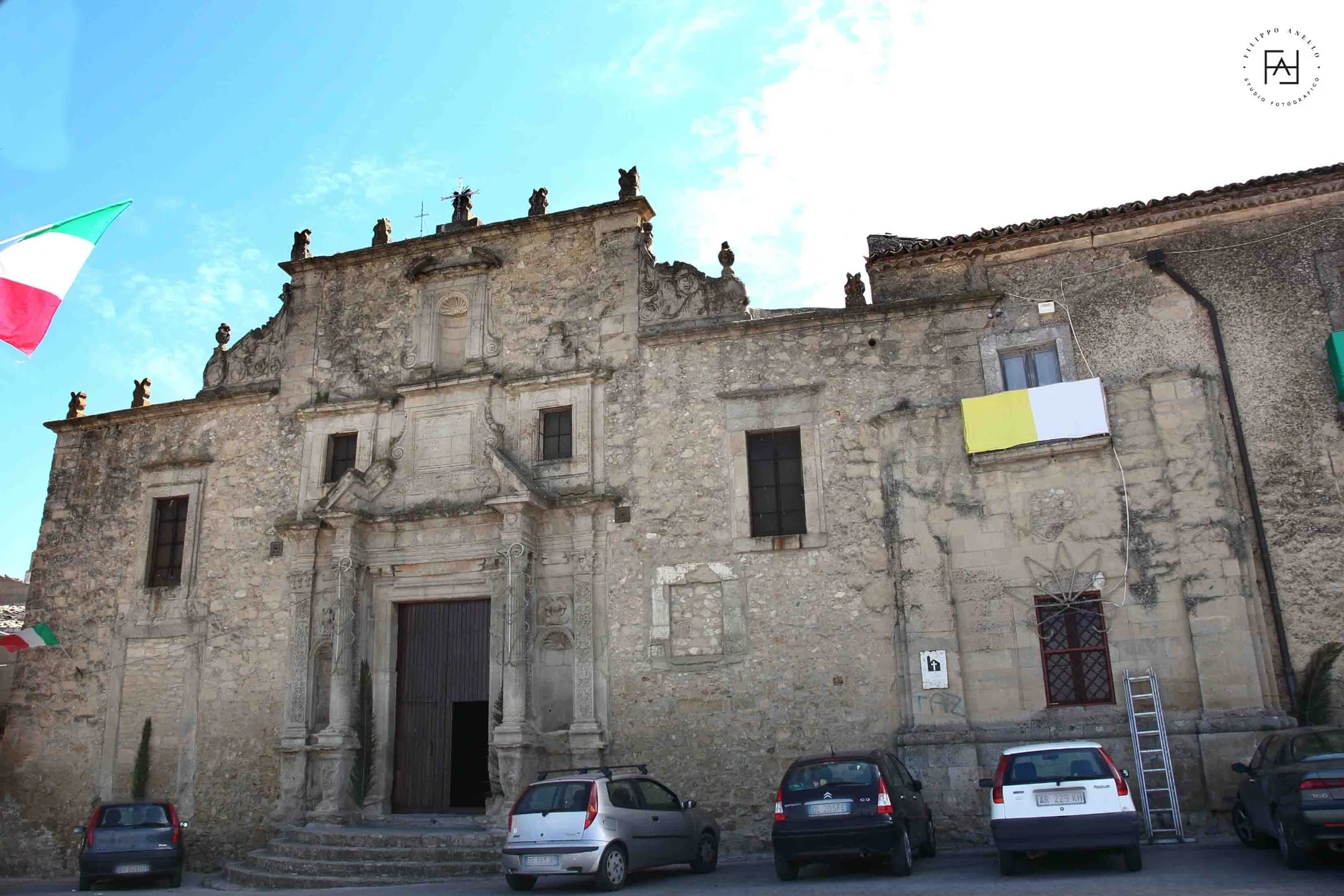
The Collegiate Church of SS. Salvatore.
Collegiate Church of SS. Salvatore · Piazza Roma · Agira
View photo01 / THE PLACE
At the foot of the castle hill, the church of the Most Holy Saviour preserves centuries of religious and artistic history. Columns, chapels and traces of the Jewish community reveal different chapters in Agira’s past.
LISTEN TO THIS PLACE
The collegiate church, narrated.
An introduction, six chapters and a closing exploring the church’s origins, capitals, chapels, treasures and stone Aron. The audio guide and transcripts are in English. Listen in sequence or choose a track.
Audio in English · 8 chaptersIntroduction — One church, many eras
- Listen 0:35
Introduction — One church, many eras
Read the transcript
Welcome to the Collegiate Church of the Most Holy Saviour, in Piazza Roma, at the foot of the castle hill in /A ˈdʒiːra/.
This church holds centuries of religious and artistic history. Its columns, chapels, and artworks reveal different periods in the life of the building and its community.
We will explore its medieval origins, its devotional images, and a precious reminder of the town’s Jewish heritage.
Let us begin outside, before allowing the details within to guide us.
- Listen 0:49
Chapter 1 — The origins of the collegiate church
Read the transcript
The Most Holy Saviour is among the oldest churches in /A ˈdʒiːra/. Its original layout dates back at least to the twelfth century, during the Norman period.
For centuries, its history was linked to the Abbey of San Filippo and Santa Maria Latina in Jerusalem.
The façade, combining late Renaissance design with Baroque elements, took shape mainly in the mid-seventeenth century. The bell tower also preserves traces of rebuilding after the earthquake of sixteen ninety-three.
In sixteen eighty-nine, Francesco Carafa, Bishop of Catania, granted the church collegiate status, establishing a chapter of canons.
The same year appears in an inscription on one of the column capitals.
- Listen 0:43
Chapter 2 — Columns and capitals
Read the transcript
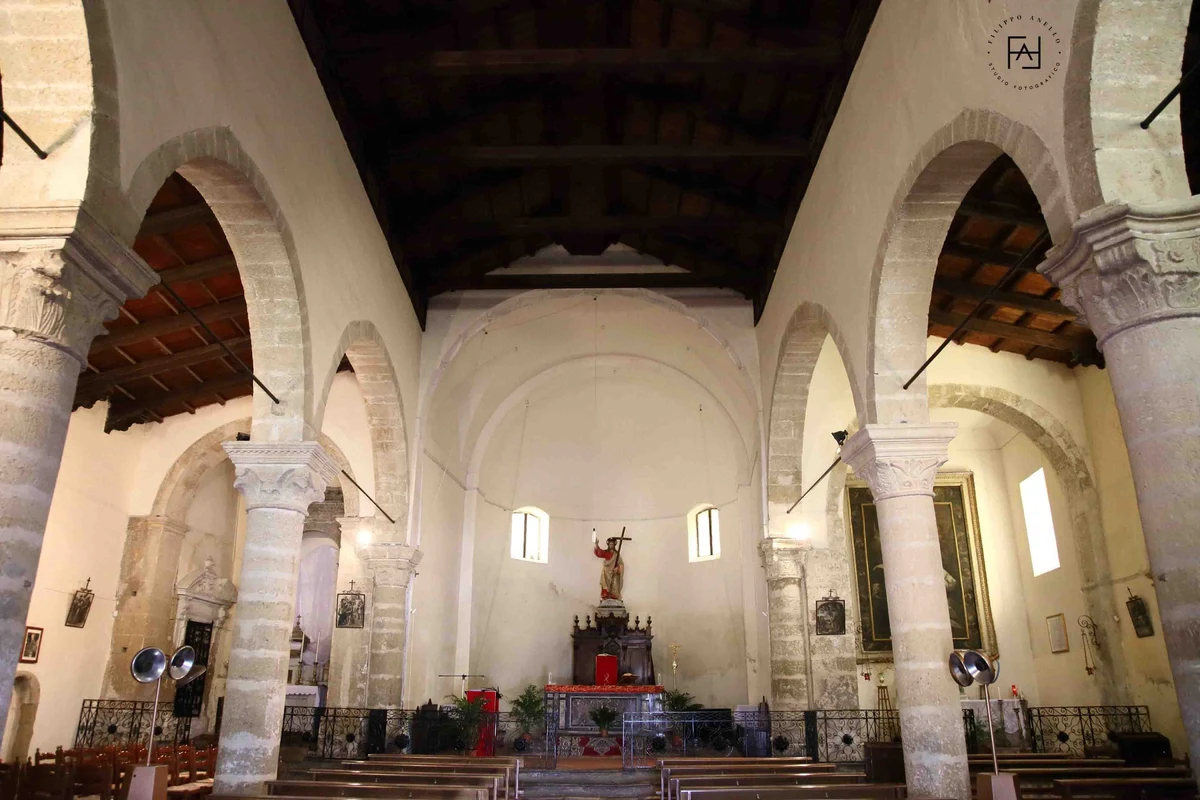
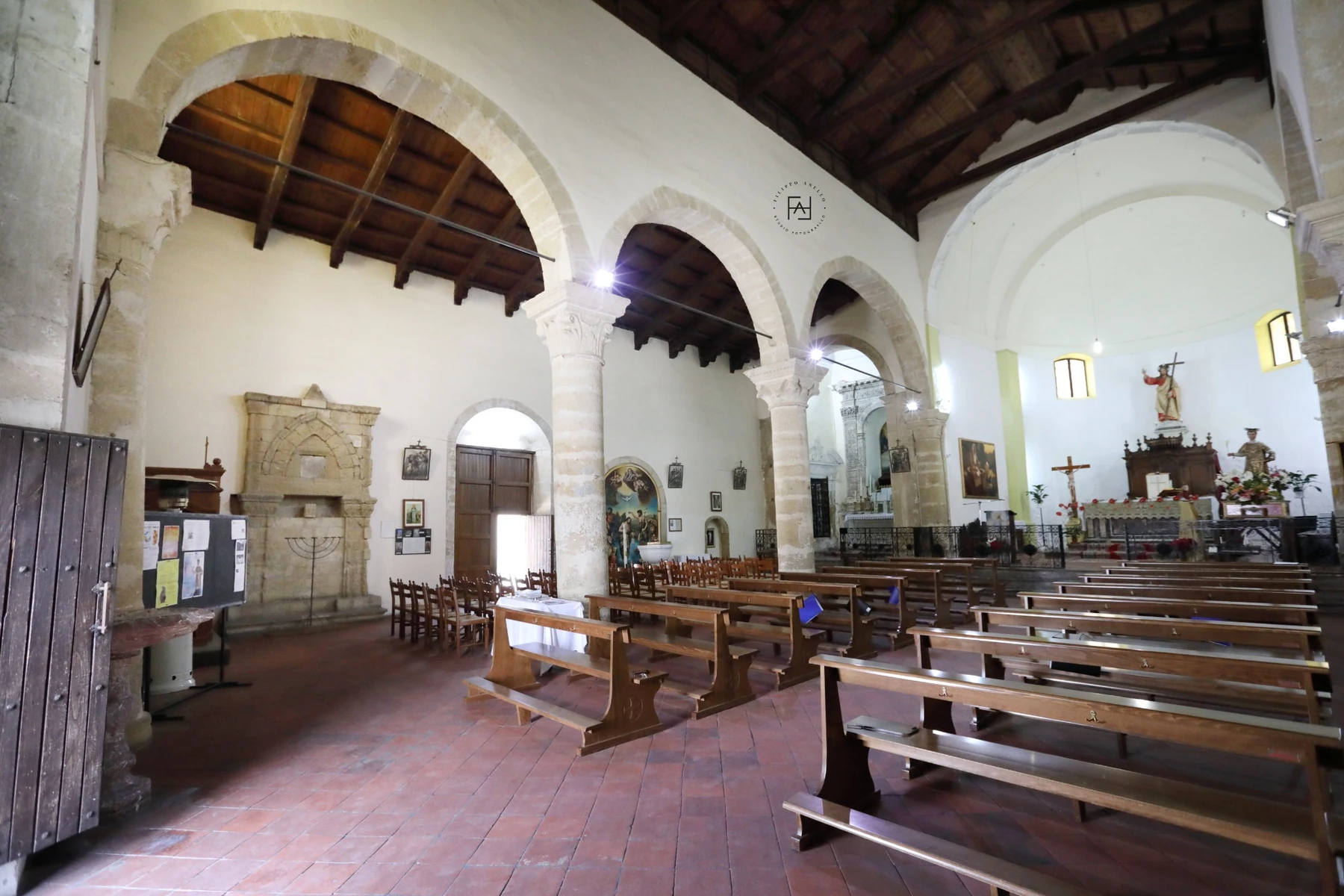
If you can enter, notice the unusual shape of the interior: its ground plan is almost square.
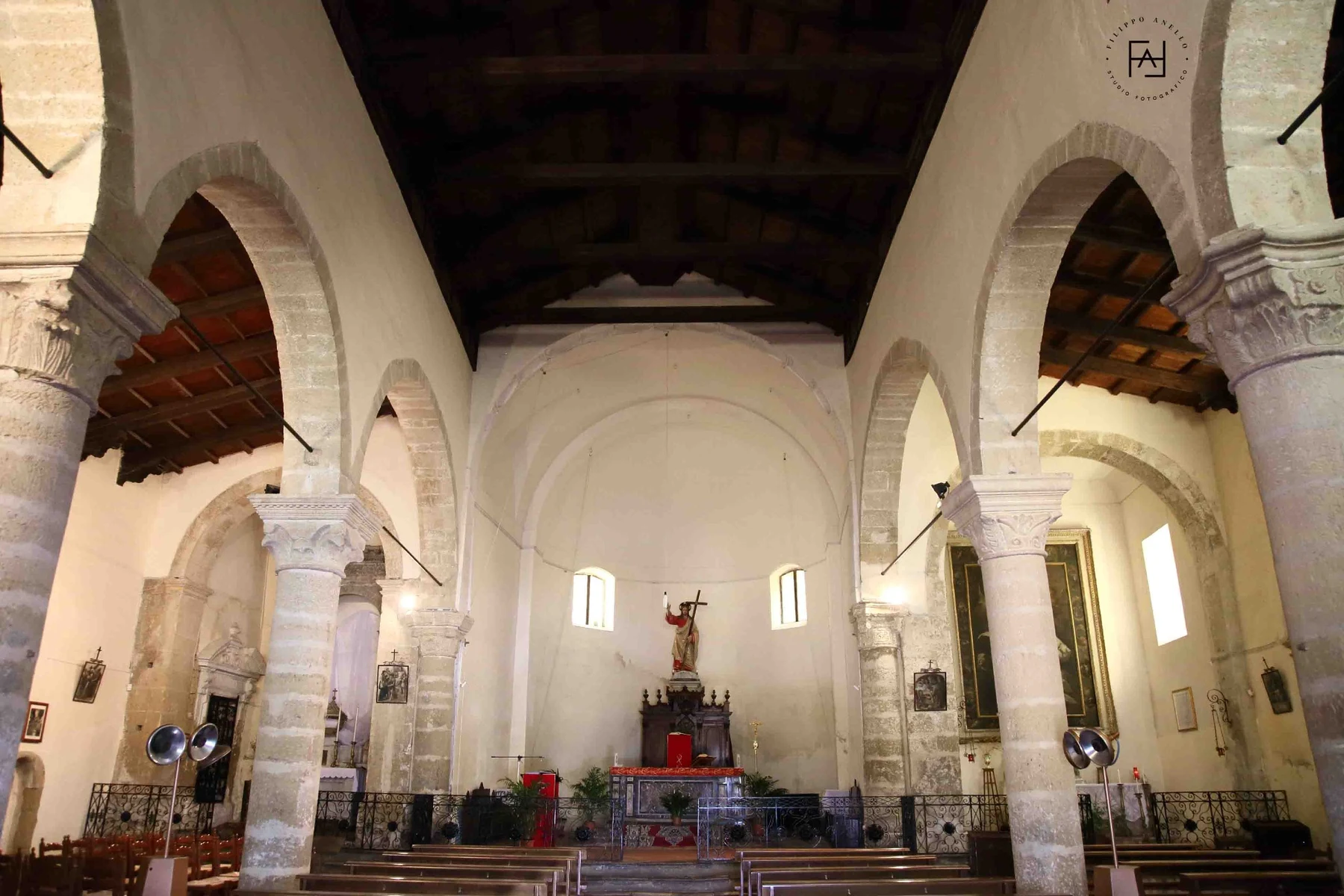
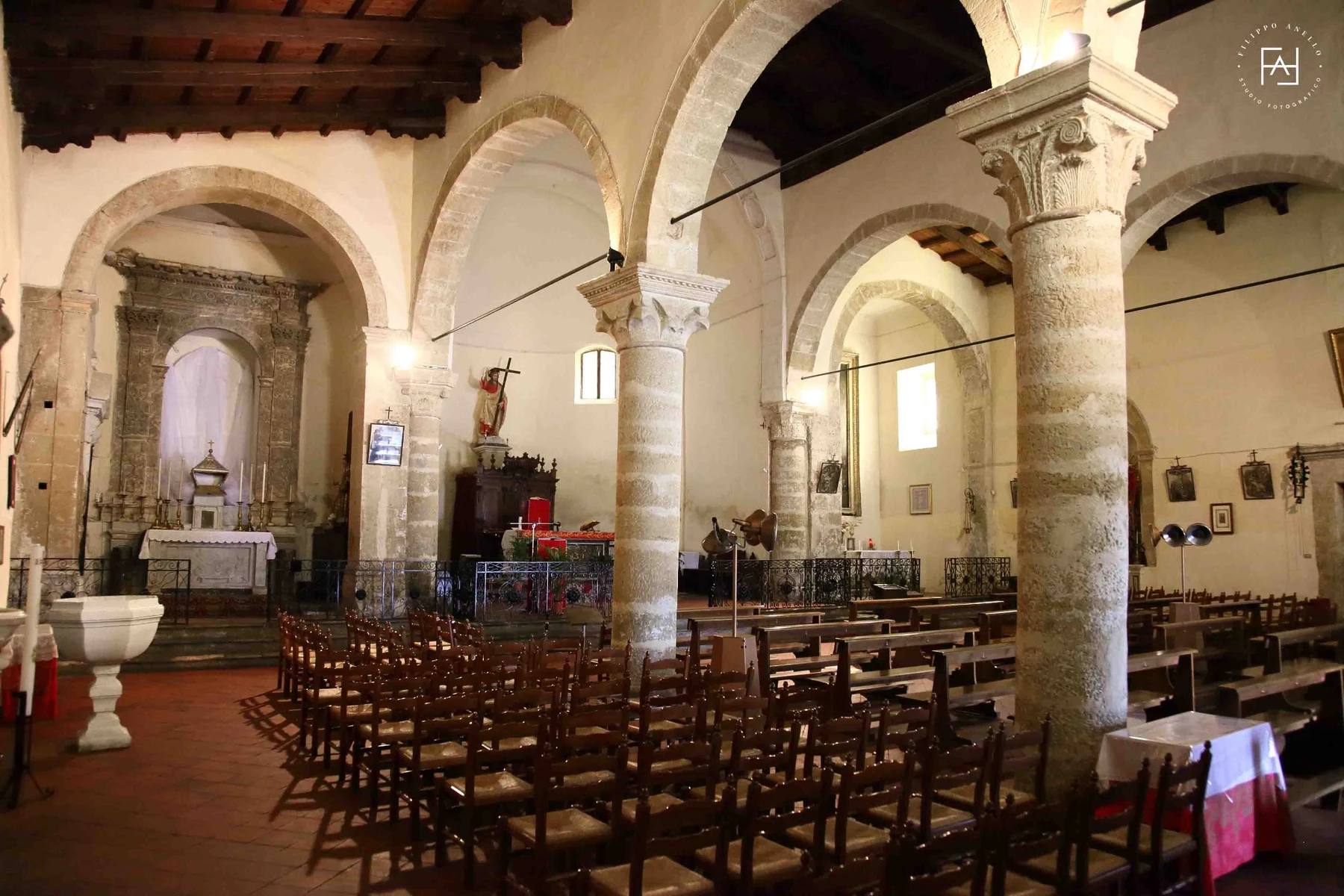
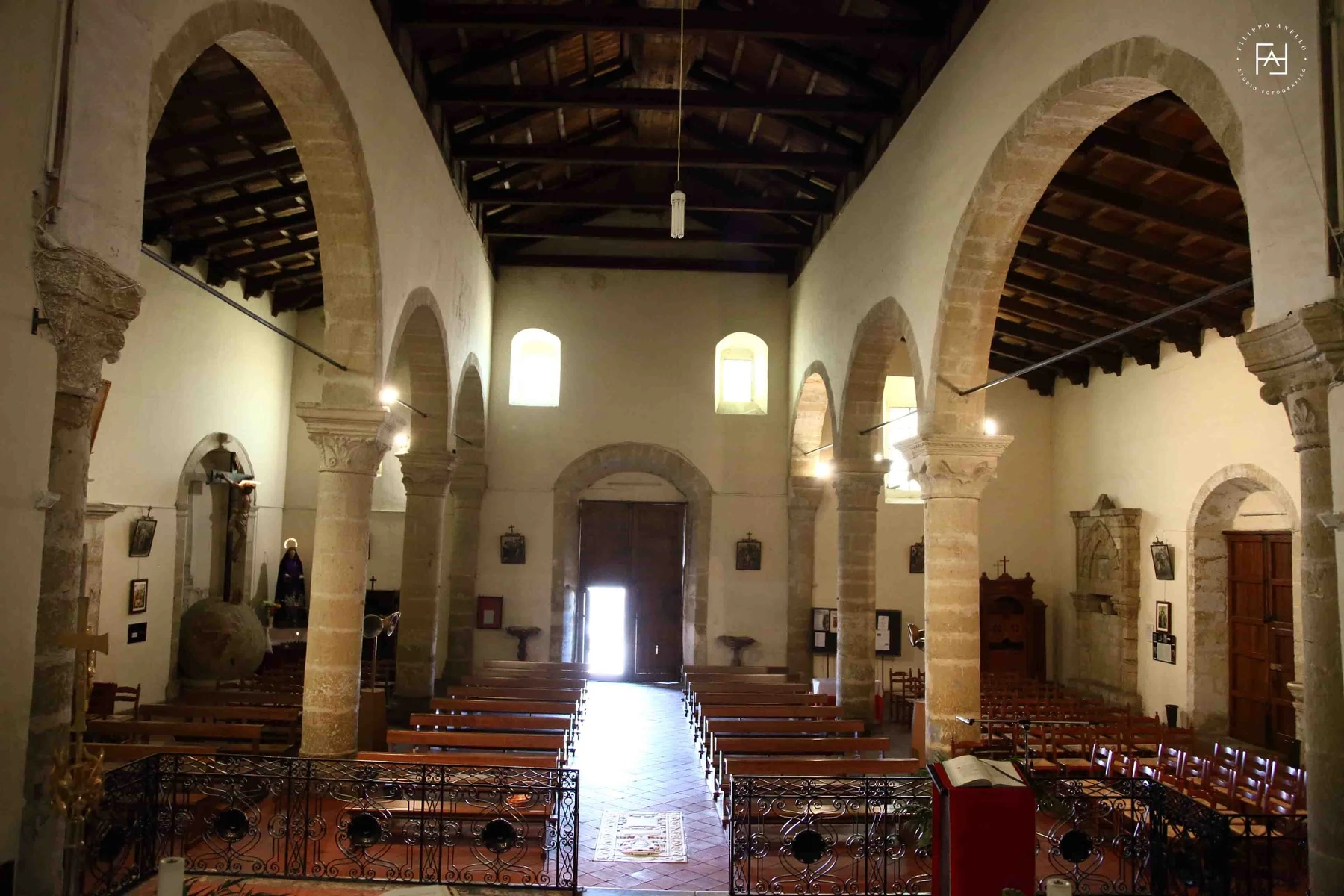
Two rows of columns support the arches and divide the church into a central nave and two side aisles. Above the central nave, you can see the wooden trusses supporting the roof.
Look closely at the capitals, at the tops of the columns.
Each is different. Scrolls, plant motifs, and figures invite you to compare their carved decorations.
Choose one detail, then look for what changes on the next column. It is a simple way to discover the variety within this space.
- Listen 0:43
Chapter 3 — The Chapel of Saint Philip the Deacon
Read the transcript
For centuries, the left aisle belonged to the Abbey and was dedicated to Saint Philip the Deacon, known locally as San Filippu u nicu or San Fulippuzzu.
He is a different figure from Saint Philip of /A ˈdʒiːra/, the town’s patron saint.
In the late sixteenth century, the altar was enriched with an elaborate carved surround.
An old iron gate enclosed the space that housed the chest containing the town’s relics.
Some relics and devotional objects are traditionally associated with the Holy Places of Palestine. These connections form part of the community’s religious memory.
- Listen 0:45
Chapter 4 — The abbots’ treasures
Read the transcript
Among the precious objects associated with the church are a mitre, the ceremonial headdress, and a crozier, the curved staff carried by abbots.
Their origins and dates have been debated over time.
According to studies cited in local historical accounts, the mitre took its present form in the mid-sixteenth century, incorporating older enamels, gems, pearls, and embroidery.
The curved head of the crozier is generally dated to the fourteenth century.
Both reflect the refinement of Sicilian craftsmanship in precious materials. Ask at the church whether they can be viewed during your visit.
- Listen 0:48
Chapter 5 — Images of devotion
Read the transcript
A precious panel painting depicts Saint Philip of /A ˈdʒiːra/ holding a book, with a chained demon beneath his feet.
The image recalls the tradition of the saint as a deliverer from demonic forces.
It is considered a surviving section of a polyptych, an artwork made up of several painted panels. Its artist and date remain uncertain, although a date in the late fourteenth century has been proposed.
In the right aisle, the altar of Our Lady of the Rosary holds an eighteenth-century painting of the Virgin and Dominican saints.
The church is also associated with Easter, when the meeting between the Risen Christ and the Virgin Mary renews a deeply cherished local tradition.
- Listen 0:55
Chapter 6 — The Aron and Jewish memory
Read the transcript
In the left aisle stands the reassembled Aron ha-Qodesh, the ark that once held the Torah scrolls in the old synagogue on Via Santa Croce.
Dating from fourteen fifty-four, it preserves the memory of the medieval Jewish community of /A ˈdʒiːra/.
Carved from stone, it is recognised as one of Europe’s three oldest surviving stone synagogue arks.
Its Hebrew inscription recalled an invitation from the prophet Isaiah to walk in the light of the Lord.
The Aron was not originally part of this church. Following the expulsion of the Jews from Sicily, the synagogue was converted to Christian worship. As that building later deteriorated, the ark was recovered and reassembled here.
You can explore its story further with the dedicated Aron audio guide on Hello /A ˈdʒiːra/.
- Listen 0:37
Closing — Continue exploring
Read the transcript
Our visit ends here.
Before moving on, take another look at a detail that caught your attention: a capital, a chapel, or the stonework of the Aron.
Please respect the spaces used for prayer and check with the church about access to individual artworks.
Continue exploring the historic centre with Hello /A ˈdʒiːra/, a free, independent project created and curated by Giuseppe Ricceri to share and celebrate the town’s heritage.
Thank you for listening, and enjoy discovering /A ˈdʒiːra/!
Free audio guide created and curated by Giuseppe Ricceri for Hello Agira.
HISTORY AND LANDSCAPE
One church, many periods.
Among Agira’s oldest churches, SS. Salvatore stands in the historic centre below the castle hill. Its original layout dates back at least to the 12th century, during the Norman period. For centuries, its history was closely tied to San Filippo Abbey, formerly Santa Maria Latina of Jerusalem.
The late Renaissance façade, with Baroque elements, largely took shape in the mid-17th century, as recorded by the inscription on its portal. The bell tower also retains traces of different periods and rebuilding after the earthquake of 1693.
Three naves and varied capitals.
The interior has an unusual, almost square plan. Two rows of columns support the arches and divide the space into three naves, beneath a wooden roof with exposed trusses in the central nave.
The carved capitals, each different from the others, reward a closer look: scrolls, plant motifs and figures reveal the variety of the church’s decorative vocabulary.
The chapel of Saint Philip the Deacon.
For centuries, the left nave belonged to San Filippo Abbey and was dedicated to Saint Philip the Deacon, locally known as San Filippu u nicu or San Fulippuzzu. He is distinct from Saint Philip of Agira, the town’s patron saint.
In the late 16th century, the altar was embellished with an elaborate carved frame. An old iron gate enclosed the area where the town’s reliquary chest was kept. Relics and devotional objects, some traditionally associated with the Holy Places of Palestine, tell the story of the community’s religious life.
The mitre and the crozier.
The precious objects associated with the church include a mitre and a crozier linked to the abbots of Santa Maria Latina and San Filippo. Their attribution and dating have been debated over time, and devotional traditions should be distinguished from scholarly interpretations.
According to the studies discussed in the local historical account, the mitre in its present form was made between 1552 and 1557, reusing older enamels, gems, pearls and embroidery. The crook of the crozier is generally dated to the 14th century. Both attest to the refinement of Sicilian luxury craftsmanship.
Saint Philip and the demon.
A precious painted panel shows Saint Philip of Agira in religious robes, holding a book, with a chained demon beneath his feet. The image evokes the hagiographic tradition of the saint as a deliverer from demonic forces.
The panel is considered a surviving part of an old polyptych. Its artist and date are uncertain, although a late-14th-century date has been proposed. In the right nave, the altar of Our Lady of the Rosary holds an 18th-century painting of the Virgin and saints of the Dominican tradition.
From parish to collegiate church.
Local historical documentation dates the elevation to collegiate status to 1689, under Francesco Carafa, Bishop of Catania. The same year is recorded in an inscription on one of the church’s capitals.
SS. Salvatore is also connected with Holy Week traditions. On Easter Sunday, the meeting between the Risen Christ and the Madonna renews a particularly meaningful moment in Agira’s religious life.
The Aron ha-Qodesh: memory in stone.
Reassembled in the left nave is the Aron ha-Qodesh, the ark for Torah scrolls from the former synagogue in Via Santa Croce. Dated to the Hebrew year 5214, corresponding to 1454, it preserves the memory of Agira’s medieval Jewish community.
Made of stone, it is listed by the Foundation for Jewish Cultural Heritage in Italy among Europe’s three oldest stone synagogue arks. Its now badly worn Hebrew inscription referred to Isaiah 2:5, inviting the house of Jacob to walk in the light of the Lord.
The Aron was not originally part of the church. After the expulsion of the Jews from Sicily, following the decree of 1492 and departures continuing into 1493, the Santa Croce building was converted to Christian worship. As that building deteriorated, the Aron was recovered and reassembled in SS. Salvatore. Its dedicated page explores this history and offers the existing Aron audio guides.
TAKE A CLOSER LOOK
Details make the place.
The capitals
Compare scrolls, figures and plant motifs: each capital has different details.
The left nave
Identify the chapel of Saint Philip the Deacon and its connection with the abbey.
The Aron
A stone structure from 1454 preserves evidence of Agira’s Jewish history.
THE PLACE, IN PICTURES
Change your perspective.
A closer look at the details and the surrounding landscape.
KEEP EXPLORING
One stop. Many directions.
Keep exploring Agira, with time for breaks.