Stone, words and memory
The Aron and Jewish heritage.
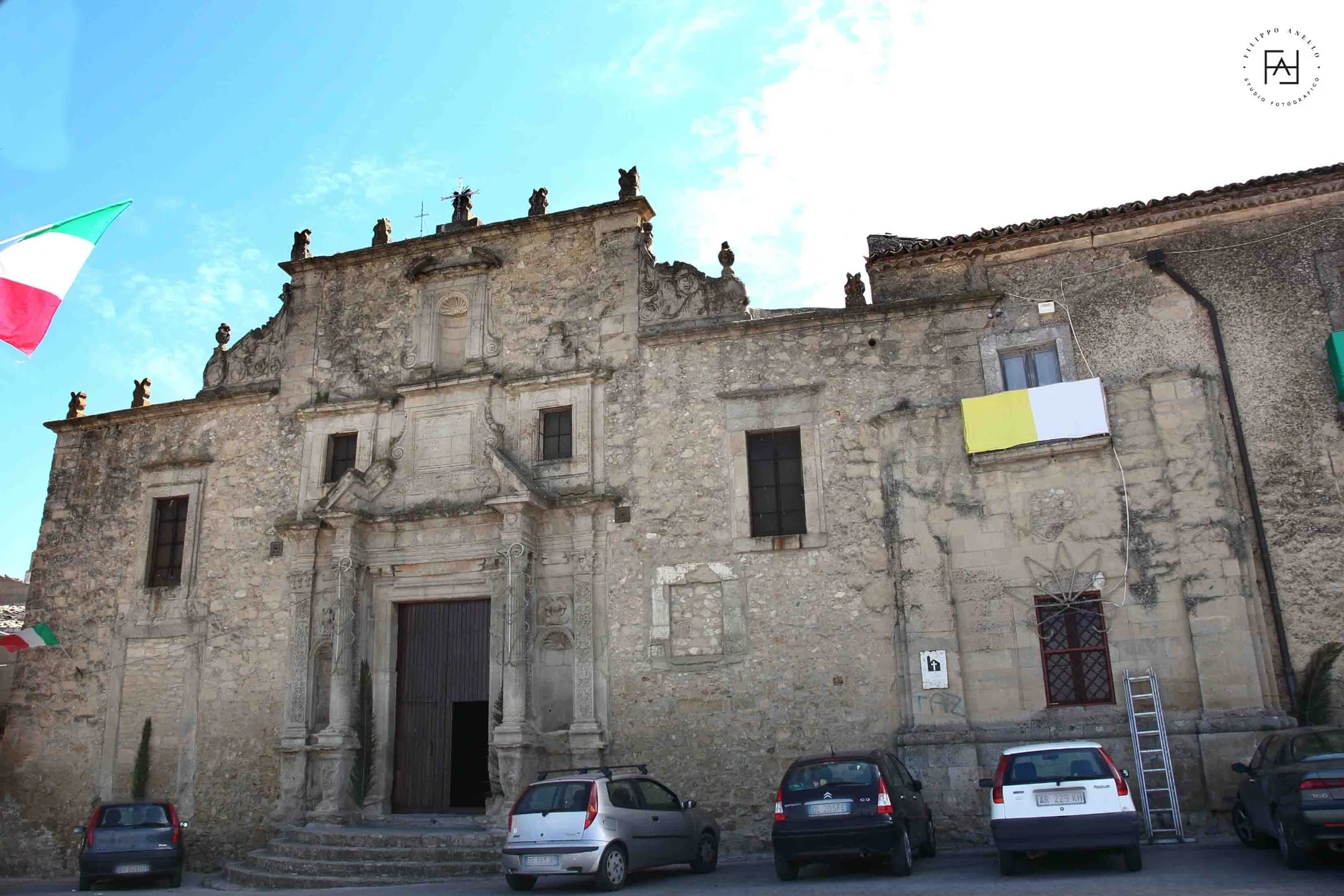
Collegiate Church of SS. Salvatore · Agira
View photo01 / THE PLACE
A stone witness to Agira’s Jewish history. The Aron invites you to pause over its carved words and the memory of the community to which it belonged.
LISTEN TO THIS PLACE
The Aron, narrated.
Three chapters in English to listen to in sequence or individually: the sacred ark, the inscription and Agira’s Jewish heritage.
Audio in English · 3 chaptersA Sacred Ark in Stone
- Listen 1:04
A Sacred Ark in Stone
Read the transcript
Welcome to the stone Aron of Agira, a surviving witness to the town’s medieval Jewish heritage.
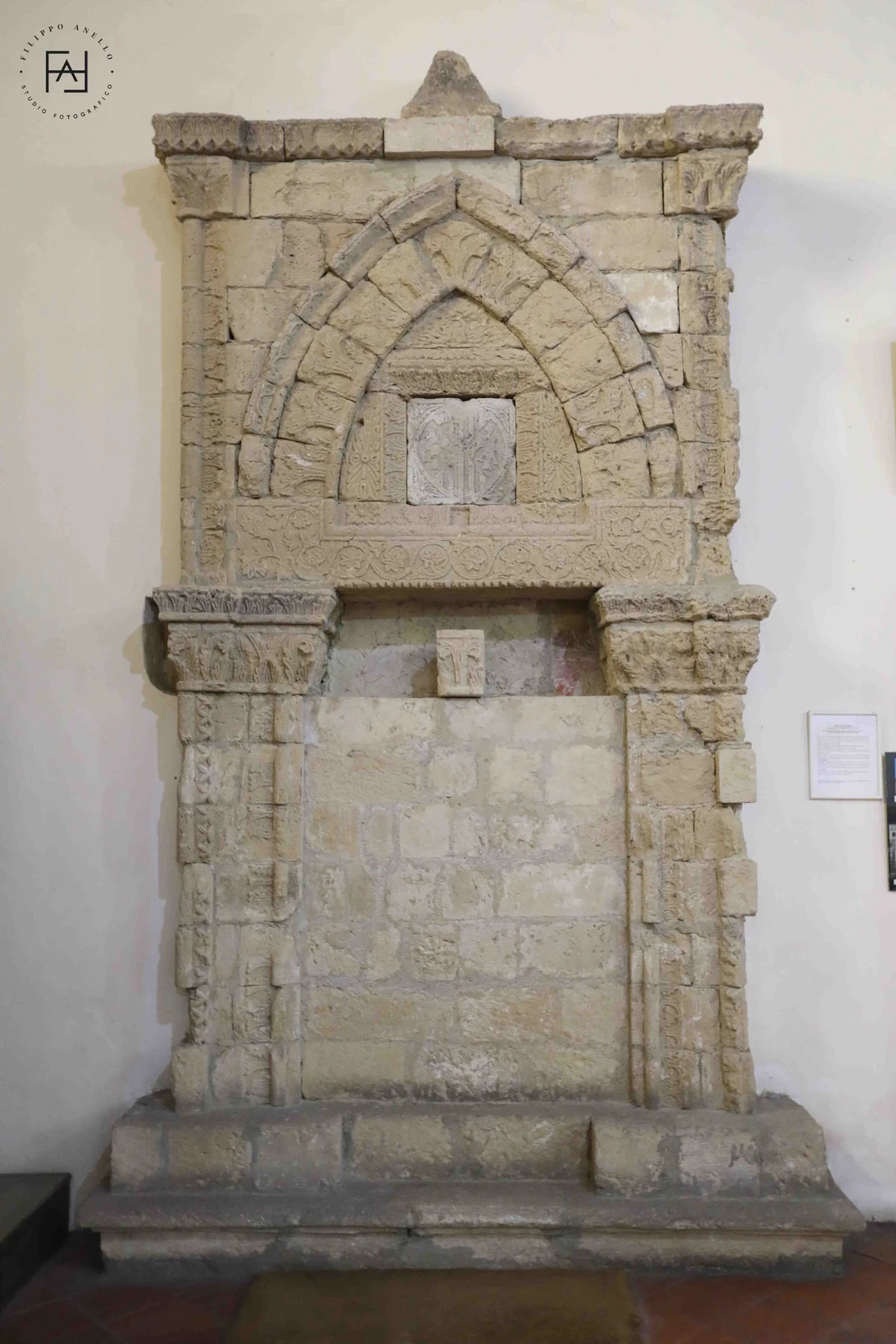
Its pointed arch may remind you of a doorway. But this structure had a different purpose.
An Aron ha-Qodesh is the sacred ark of a synagogue: the place where the Torah scrolls are kept. These scrolls contain the five books of Moses and hold a central place in Jewish religious life.
The Aron of Agira originally belonged to the synagogue in Via Santa Croce. It is dated to fourteen fifty-four and is recognised as one of Europe’s oldest surviving stone synagogue arks.
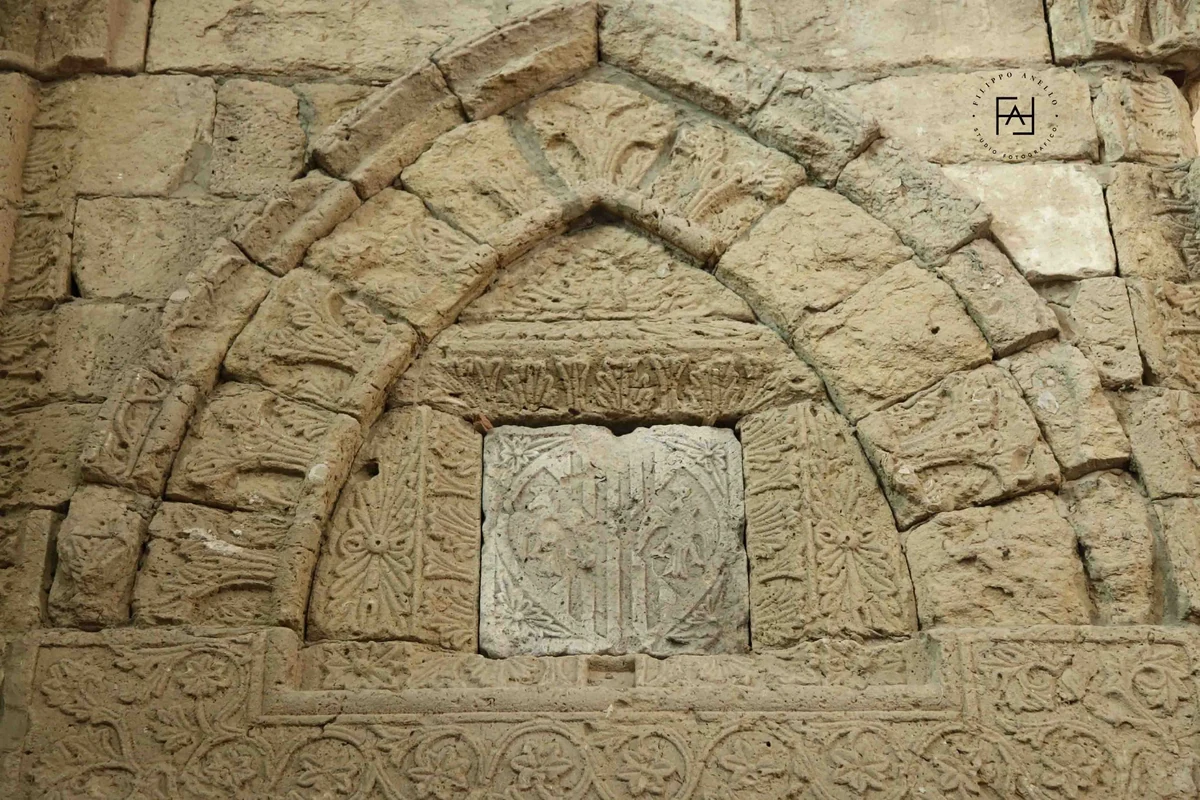
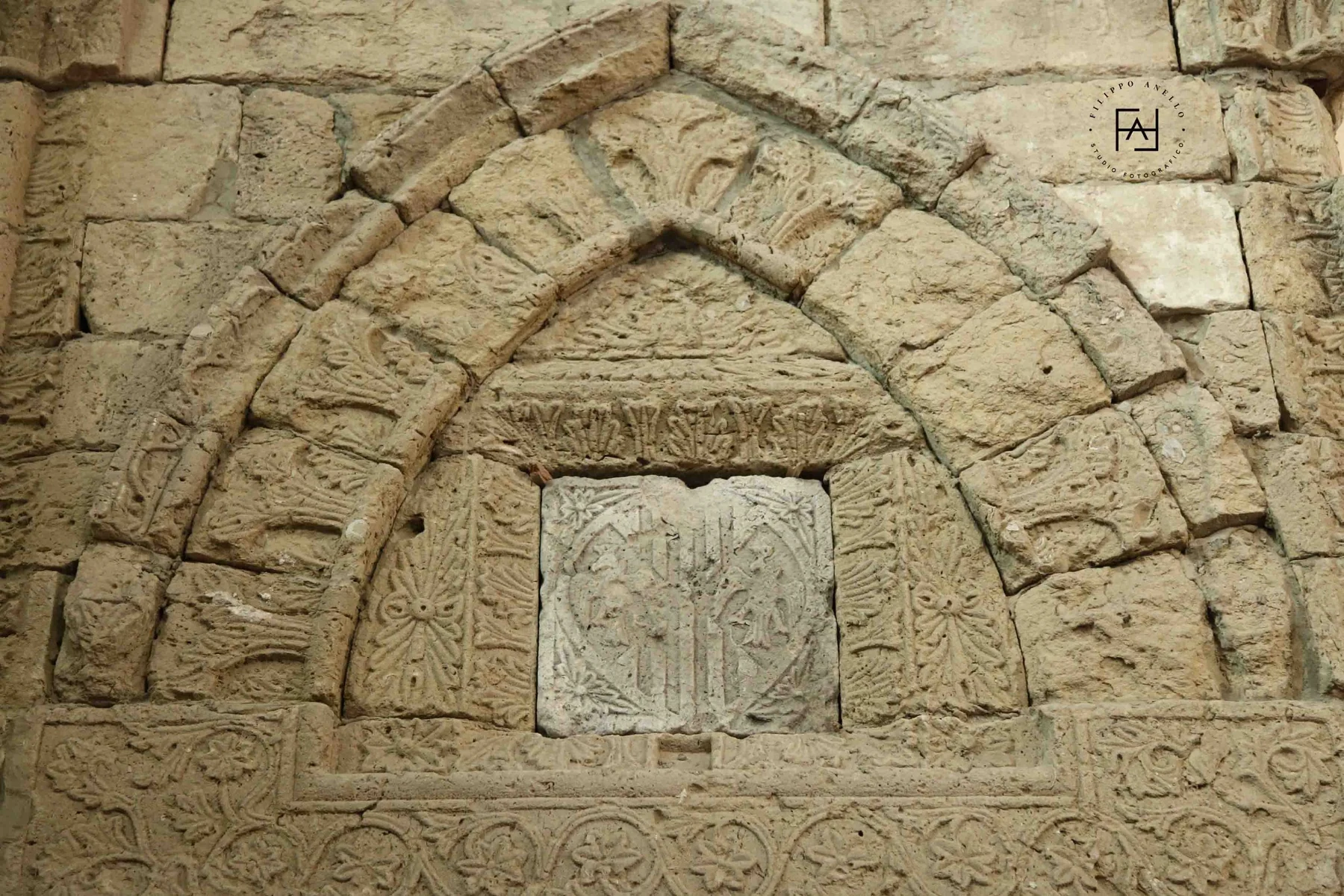
Take a moment to look at its carved details: the pointed arch, the decorated capitals, and the horizontal band bearing Hebrew letters.
These features belong to a sacred furnishing made for a community that gathered here to worship. The stone preserves a tangible connection to that community, centuries after the synagogue ceased to serve its original purpose.
- Listen 1:18
Words Carved in Stone
Read the transcript
The Hebrew inscription is a key to understanding the Aron.
It draws on a verse from the Book of Isaiah, chapter two, verse five:
“O house of Jacob, come, let us walk in the light of the Lord.”
These words connect the structure directly to the sacred text. They also provide the basis for its dating.
Hebrew letters can carry numerical values. The interpretation of marked letters in this inscription identifies the Jewish year five thousand two hundred and fourteen, conventionally given in the sources as fourteen fifty-four.
Time has worn the inscription, making parts of it difficult to read. Its study therefore required more than an examination of the surviving stone.
After visits beginning in nineteen ninety-five, the scholar Benedetto Rocco established its dating in nineteen ninety-six. The local historian Filippo Maria Provitina assisted him, and an old photographic glass plate helped recover portions of the inscription that had become less legible.
An earlier image had preserved what the stone was gradually losing.
The inscription allows us to recognise this structure as a sacred ark and to place it within the history of the medieval synagogue.
- Listen 1:11
A Community Remembered
Read the transcript
The Aron once stood in the synagogue of Via Santa Croce, serving the Jewish community of Agira.
Its original setting changed after the expulsion of the Jews in fourteen ninety-two. The former synagogue became a Christian place of worship, known as Santa Croce.
Within that later setting, the stone structure framed a Christian altar. Its appearance could be understood as an architectural surround, while its Hebrew inscription preserved evidence of its earlier purpose.
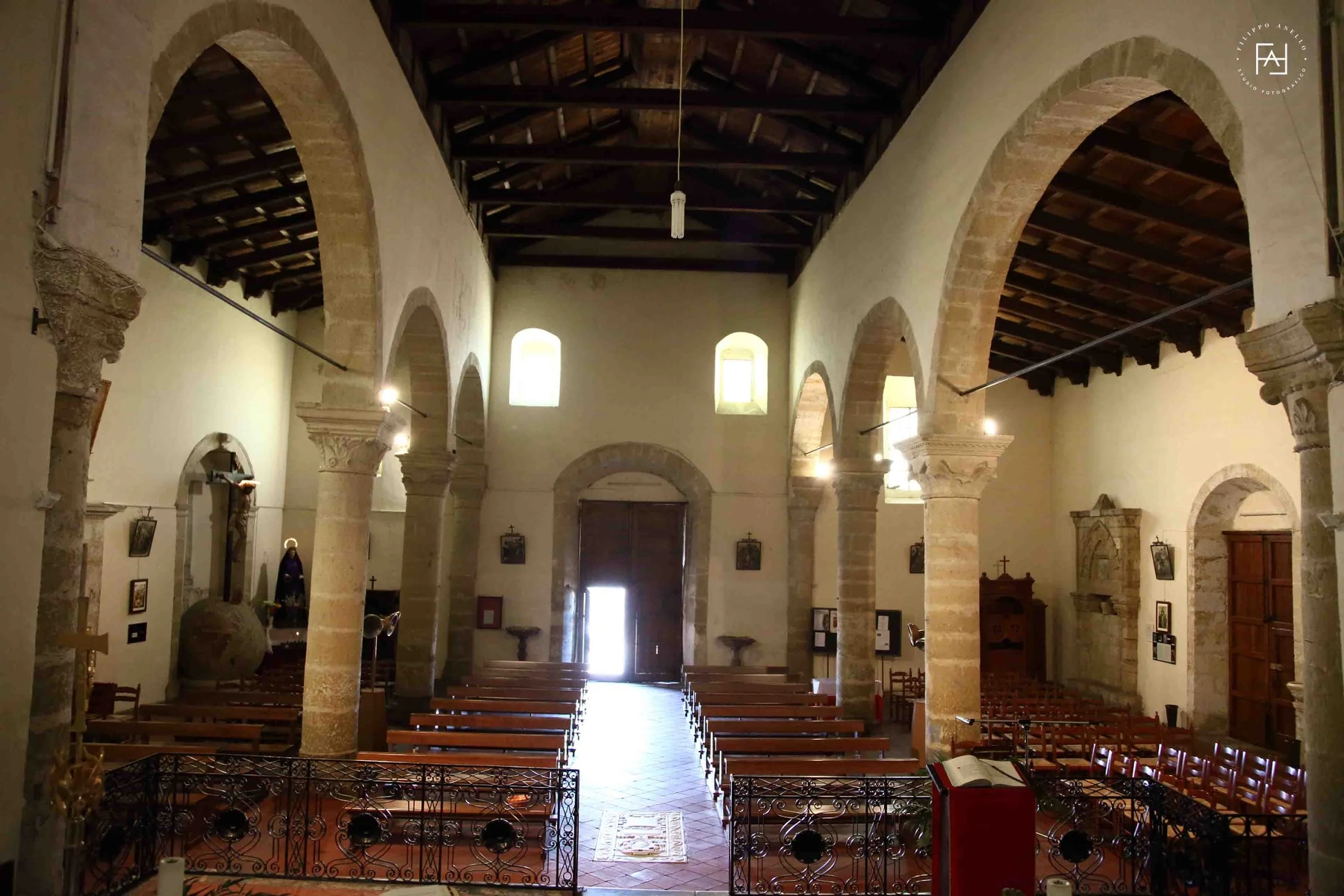
The Aron was eventually transferred and reassembled in the Church of the Most Holy Saviour, the Santissimo Salvatore.
Its survival allows us to encounter a part of the town’s history that might otherwise be difficult to see. The community that commissioned it left behind more than a date: it left an object made to protect its sacred writings.
As you look at the Aron, remember its original function. This was the place where Torah scrolls were kept, within a synagogue used by the Jewish people of the town.
Today, the surviving stone helps keep the memory of that community present.
HISTORY AND LANDSCAPE
A sacred ark in stone.
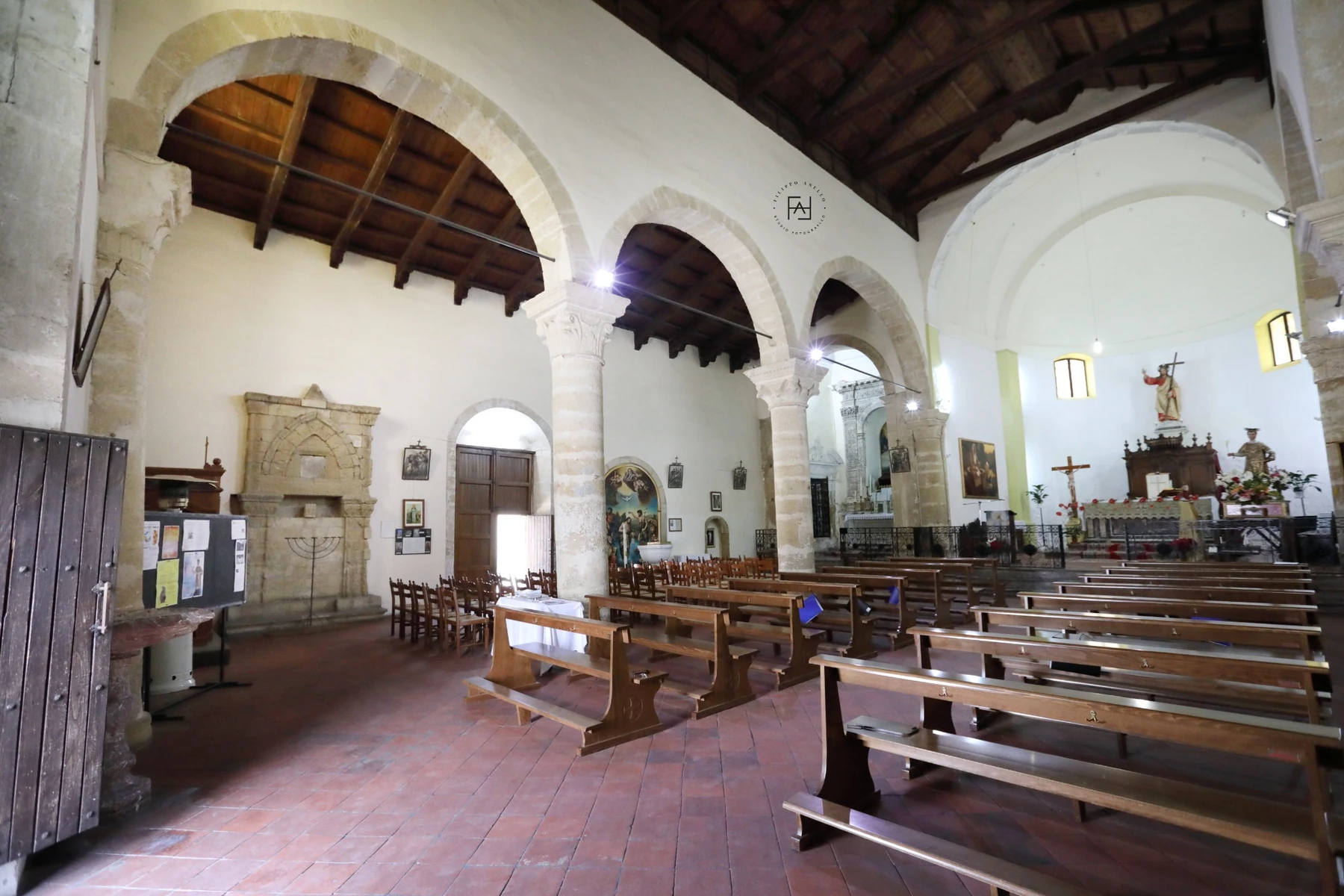
The Aron ha-qodesh is the ark used to hold Torah scrolls in a synagogue. Agira’s example is made of stone and comes from the town’s former synagogue.
The words and the date.
The corpus of Hebrew inscriptions published on the University of Messina’s Sicilia Semitica portal records the artefact with the date 1454 and links the inscription to Isaiah 2:5. The Aron is temporarily housed at the Collegiate Church of SS. Salvatore.
The memory of a community.
The Aron preserves material evidence of Jewish life in Agira. The audio guide explores it in three stages: the sacred ark, its carved words and the memory of the community.
The church that houses it.
The Aron is in the left nave of the Collegiate Church of SS. Salvatore. Discover the church’s architecture, chapels and history too.
Explore the collegiate churchTAKE A CLOSER LOOK
Details make the place.
The stone
Observe the object as a whole and the details of its structure.
The inscription
The Hebrew letters are an essential part of the monument’s history.
THE PLACE, IN PICTURES
Change your perspective.
A closer look at the details and the surrounding landscape.
Sources for further reading
KEEP EXPLORING
One stop. Many directions.
Keep exploring Agira, with time for breaks.