A residence, centuries of memories
Palazzo baronale Zuccaro.
Via Vittorio Emanuele · Piazza Garibaldi · Agira
View photo01 / THE PLACE
A baronial residence in the heart of Agira, with Baroque architecture, Neoclassical decoration and memories spanning the centuries.
LISTEN TO THIS PLACE
The palace, narrated.
An introduction, six chapters and a closing exploring the palace’s origins, the Zuccaro family, its guests and its cultural life. The audio guide and transcripts are in English. Listen in sequence or choose a track.
Audio in English · 8 chaptersIntroduction — A palace in the history of Agira
- Listen 0:39
Introduction — A palace in the history of Agira
Read the transcript
Welcome to Palazzo Zuccaro, beside Piazza Garibaldi, on Via Vittorio Emanuele.
This residence has witnessed centuries of life in Agira. It was home to a baronial family, welcomed distinguished guests, and, more recently, has become a setting for gatherings and cultural events.
You can discover its story by looking at the façade, the central balcony, and the plaque commemorating Giuseppe Garibaldi’s visit.
But that story begins long before his arrival.
To explore it, let us return to the origins of the building and the family whose name it bears.
- Listen 0:52
Chapter 1 — The origins of the residence
Read the transcript
Local historical accounts trace the palace’s origins to a building from the late fifteenth century, enlarged and transformed over the centuries that followed.
An important turning point is linked to Francesco Zuccaro.
In sixteen fifty-eight, he purchased the feudal estate of Cuticchi, establishing the baronial branch of the family. The plans for rebuilding the palace in sixteen seventy-seven are also associated with him.
The new residence was intended to express the prestige the family had achieved.
It was a home for family life, but also a place to welcome guests, build relationships, and take part in the public life of the local aristocracy.
The changes to the building therefore also tell the story of the family: a residence that grew and evolved alongside the standing of its owners.
- Listen 0:46
Chapter 2 — The Zuccaro family and the town
Read the transcript
The history of the Zuccaro family, Barons of Cuticchi and Sant’Andrea, is closely intertwined with that of Agira and its institutions.
One significant connection concerns the nearby Church of Saint Anthony of Padua.
Local sources record the family’s donation of land for the building works of fifteen sixty-seven.
As you walk, the short distance between the palace and the church helps you appreciate this connection in the layout of the town itself.
Just a few steps take you from a noble residence to a place of worship, following the traces of a family involved in shaping the town.
It is a way of understanding the historic centre through the relationships between its buildings and the people who helped create them.
- Listen 0:49
Chapter 3 — The façade and the balcony
Read the transcript
Take a moment now to look at the front of the palace.
The façade reflects the Baroque taste of its seventeenth-century reconstruction and contributes to the monumental character of this part of Agira.
Let your eyes follow the arrangement of the windows and doorways, then pause at the central balcony.
It is one of the building’s most recognisable features, partly because of the historical event associated with it.
From here, in eighteen sixty-two, Giuseppe Garibaldi addressed the people of Agira.
The commemorative plaque on the façade preserves the memory of that visit.
The balcony thus brings together the history of the house and that of the town: a private space from which, for a moment, a guest’s voice reached the community gathered outside.
- Listen 0:53
Chapter 4 — The reception hall and its painted landscape
Read the transcript
Inside, one of the main rooms is the grand reception hall, designed for gatherings and formal occasions.
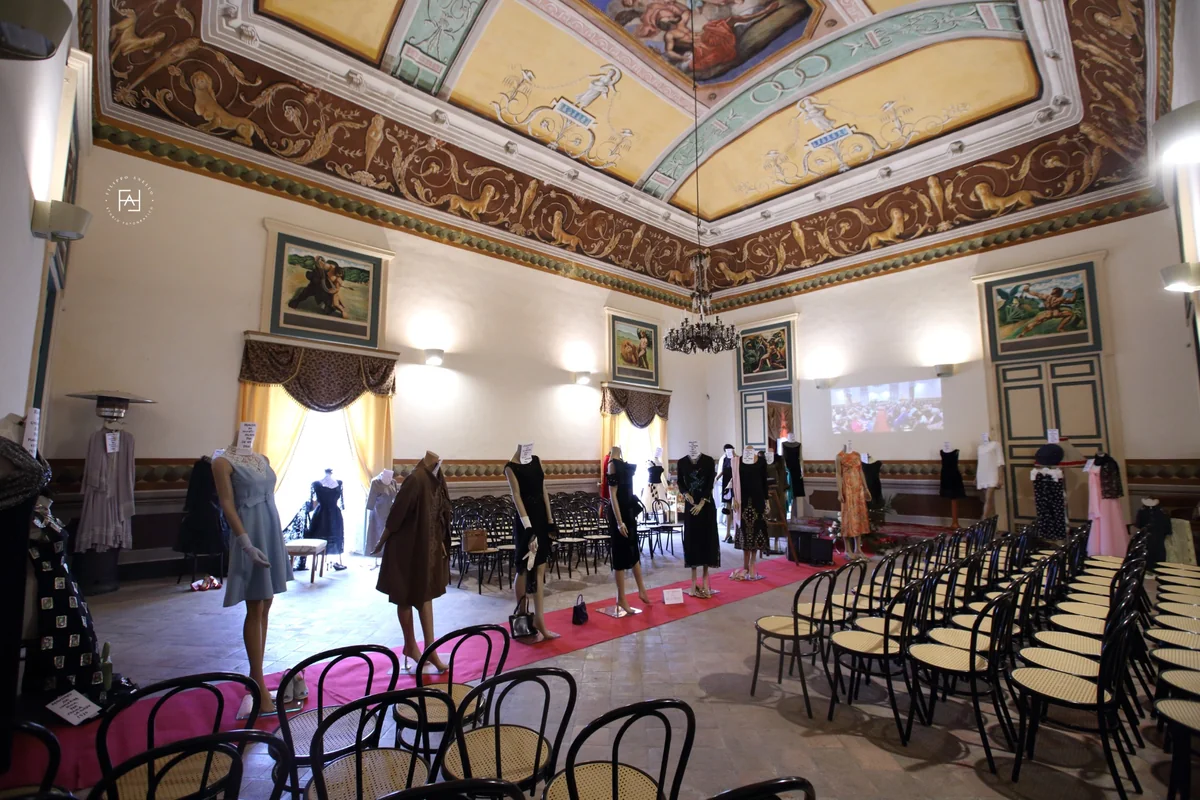
The decoration of its vaulted ceiling dates from a later period than the seventeenth-century reconstruction and reflects a Neoclassical taste.
Its subject has been interpreted as a reference to the family’s agricultural wealth.
According to this reading, Demeter, goddess of the harvest, would represent the fertility of the estates. The river figure at her feet might depict the Dittaino.
This interpretation invites us to look for a connection with the surrounding landscape in the images overhead.
The countryside, the harvests, and the river would thus become part of the residence’s story through the language of mythology.
A landscape familiar to the people of Agira, transformed into decoration and symbolism.
- Listen 0:50
Chapter 5 — A king and Garibaldi
Read the transcript
Among the guests mentioned in local historical accounts is Victor Amadeus the Second of Savoy, King of Sicily.
He is said to have stayed at the palace in seventeen fourteen, during his journey around the island.
More than a century later, on the sixteenth of August, eighteen sixty-two, Giuseppe Garibaldi was welcomed here by Baron Mauro Zuccaro.
It was during this visit that he addressed the townspeople from the balcony, an occasion still commemorated by the plaque today.
These two episodes took place many years apart, at very different moments in Sicilian history.
Yet both help us understand the palace’s role as a place of hospitality and encounter: a residence that welcomed figures whose visits would remain part of the town’s collective memory.
- Listen 1:07
Chapter 6 — Restoration and new chapters
Read the transcript
Between two thousand and one and two thousand and three, Palazzo Zuccaro underwent restoration, structural consolidation, and work to bring its spaces back into use, under the guidance of its current owner, miss Silvana Pettinato.
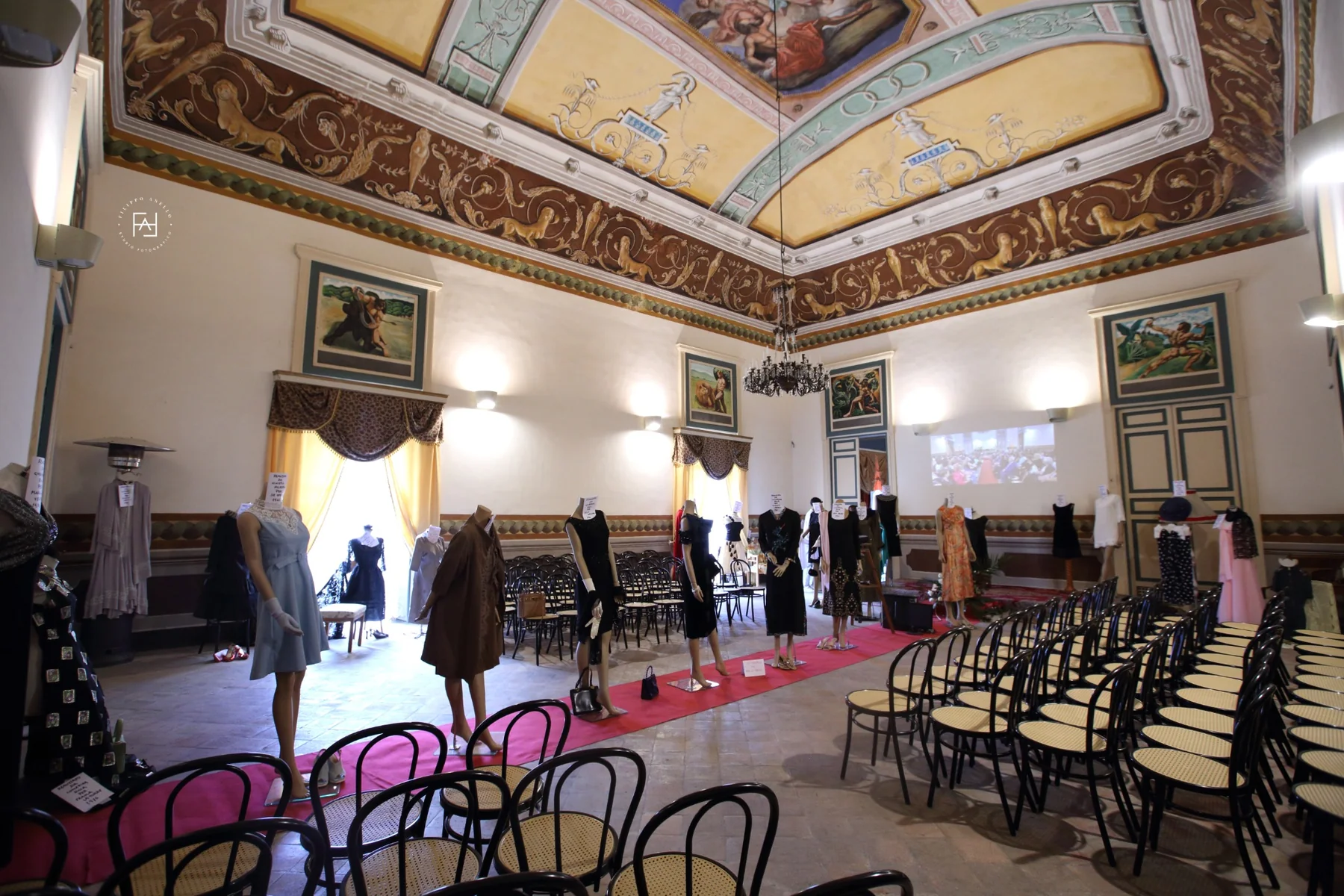
The work also included restoring the decorations in the grand reception hall and the paintings above the doorways, depicting the Labours of Hercules, by the Agira-born artist Renato Pettinato.
In the years that followed, the rooms welcomed new cultural activities.
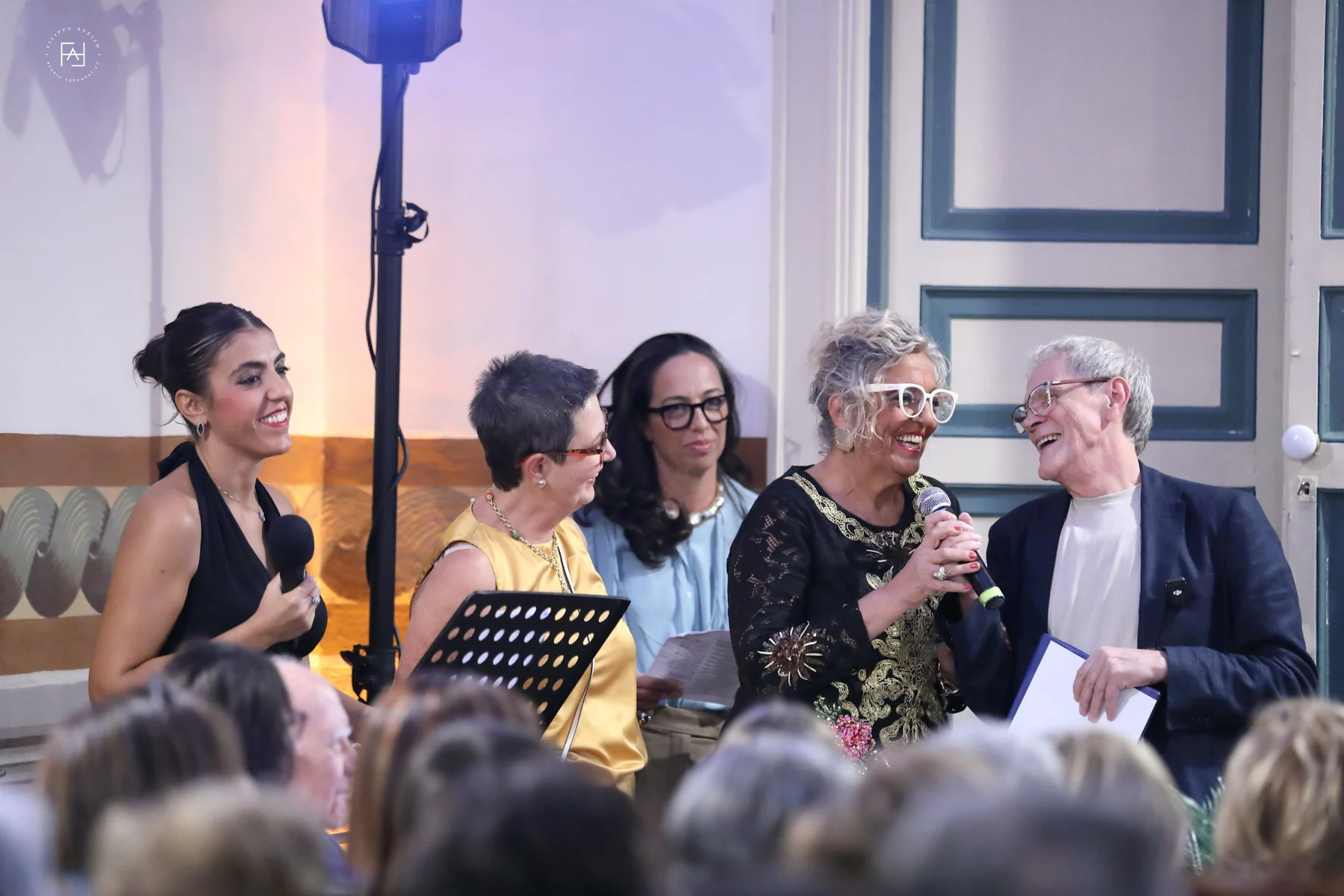
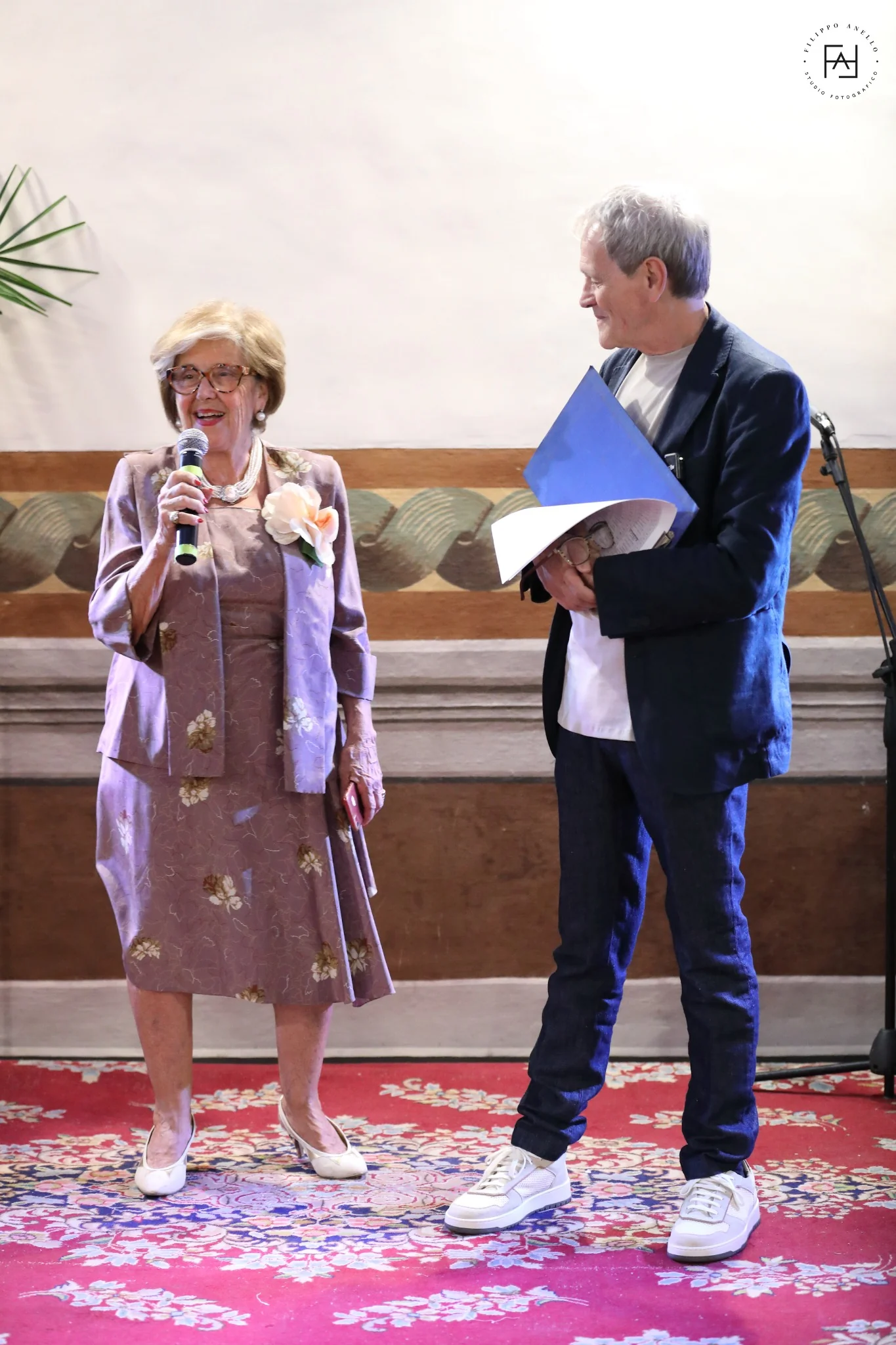
On the thirtieth of December, two thousand and twenty-three, the palace hosted the ceremony at which Agira received the flag of the Most Beautiful Villages in Italy association.
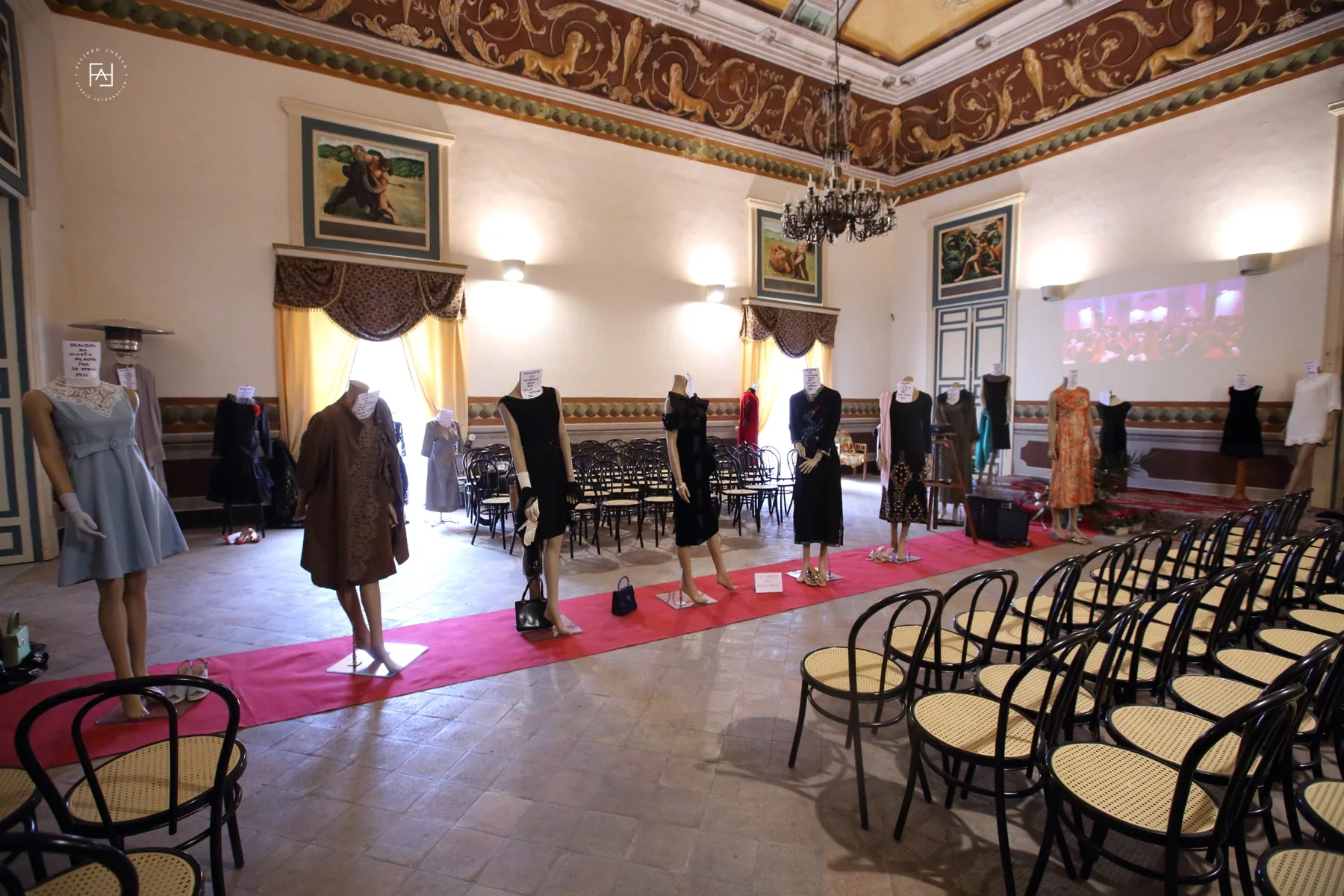
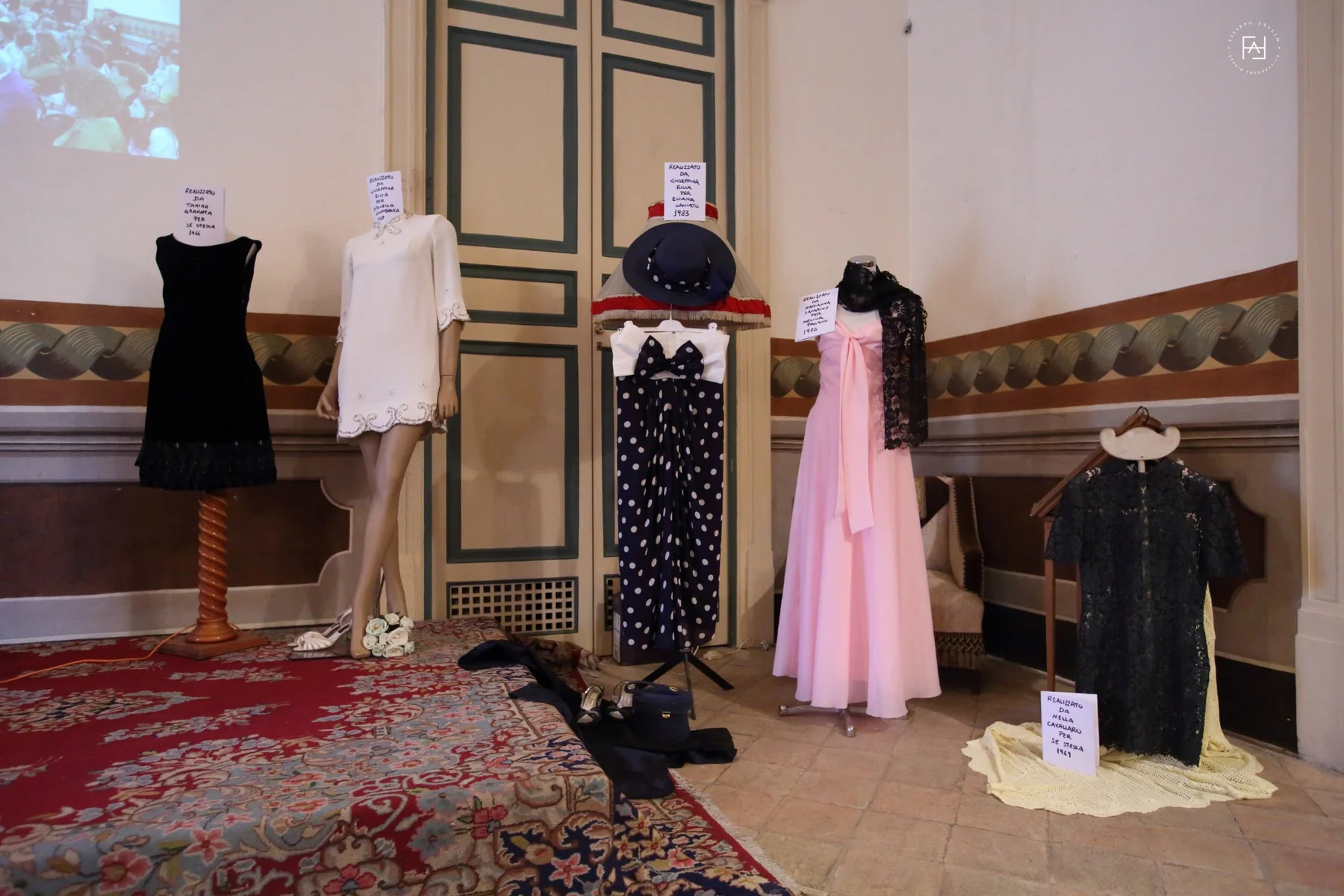
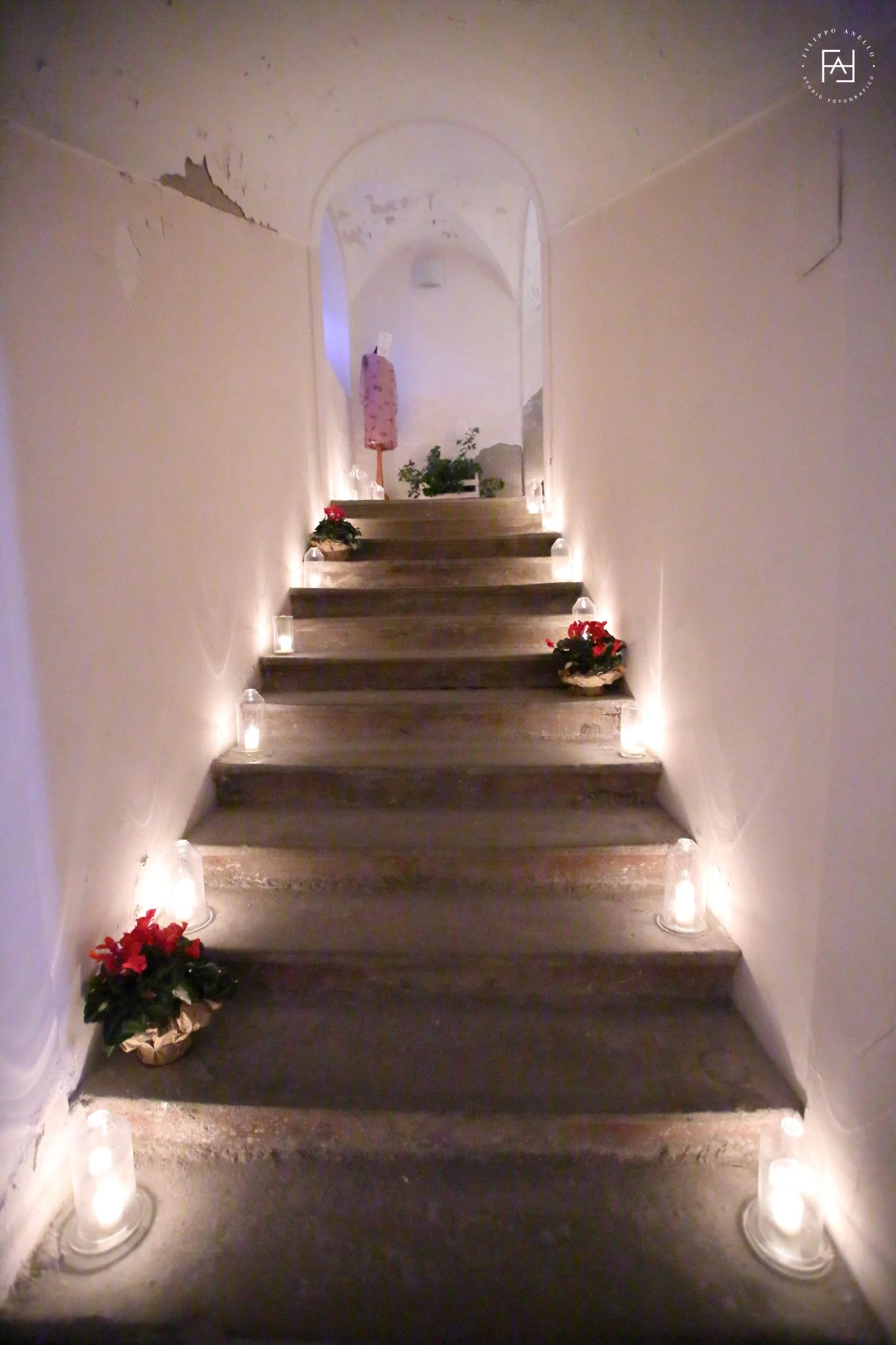
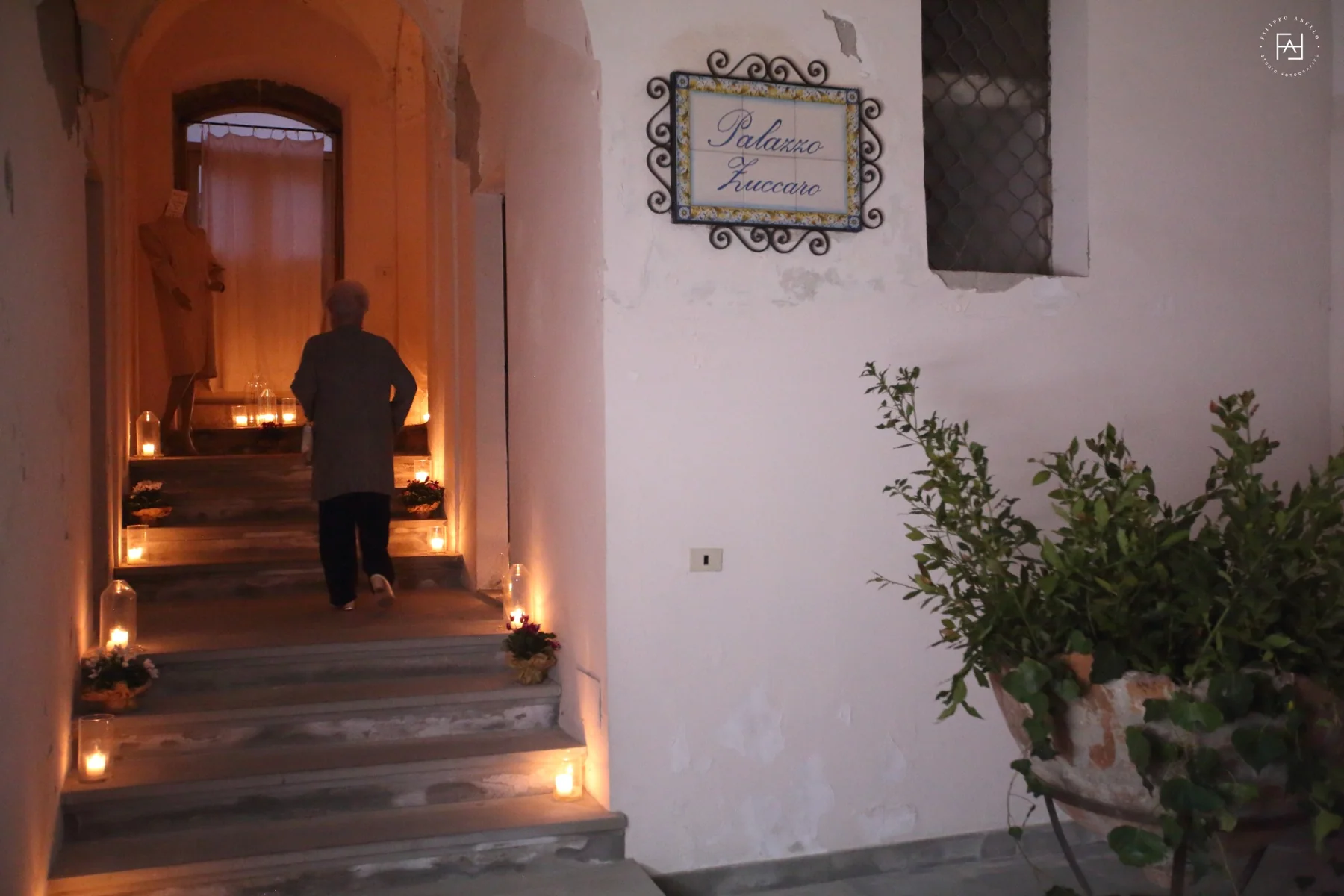
In two thousand and twenty-four, the ballroom hosted the exhibition “Fashion in Agira Through Time”, dedicated to the work of the town’s dressmakers.
Alongside the memories of noble families and distinguished guests, other stories now take their place: those of the community, its skills and traditions, and the people who continue to bring Agira’s heritage to life.
- Listen 0:44
Closing — Continue your walk
Read the transcript
Our exploration of Palazzo Zuccaro ends here.
From the street, you can admire the façade, the central balcony, and the commemorative plaque.
If you would like to see the interiors, check for openings during events, or contact the owner to arrange a guided visit.
From here, you can continue towards the nearby Church of Saint Anthony of Padua and the other sights of the historic centre.
Keep exploring Agira with us, discovering its monuments, stories, and quiet corners at your own pace. Hello Agira is a free, independent project created and curated by Giuseppe Ricceri to share the town’s heritage and help more people discover it.
Hello Agira is a free, independent project created and curated by Giuseppe Ricceri to share the town’s heritage and help more people discover it.
Thank you for listening, and enjoy exploring Agira!
Free audio guide created and curated by Giuseppe Ricceri for Hello Agira.
HISTORY AND LANDSCAPE
The origins of the residence.
Beside Piazza Garibaldi, on Via Vittorio Emanuele, Palazzo Zuccaro tells an important part of Agira’s civic history.
The former residence of the Zuccaro barons of Cuticchi and Sant’Andrea, the palace has welcomed guests, gatherings and cultural occasions. Its facade, central balcony and reception room preserve traces of the residence’s transformations and the family’s role in the town’s history.
Local historical accounts trace the palace’s origins to a building of the late 15th century, later enlarged and remodelled.
The rebuilding is associated with a project commissioned by Francesco Zuccaro in 1677. In 1658 he had purchased the Cuticchi estate, establishing the family’s baronial branch.
The new residence was intended to express the family’s prestige: a home for family life as well as gatherings and public occasions of the local aristocracy.
The Zuccaro family and Agira.
The family’s history is intertwined with that of the town and its institutions.
One significant connection concerns the nearby Church of Saint Anthony of Padua: local sources record a donation of land by the Zuccaro of Cuticchi for the works of 1567.
A short walk between palace and church reveals the relationship between noble residences, places of worship and changes in the town.
The facade and central balcony.
The palace facade reflects the Baroque taste of the rebuilding and contributes to the monumental character of this part of Agira.
During your walk, stop to look at the facade’s composition and central balcony. The latter is linked to one of the building’s best-remembered episodes: Giuseppe Garibaldi’s address to the people in 1862.
A commemorative plaque on the facade preserves the memory of that visit.
The reception room.
One of the principal rooms is the grand reception room, intended for gatherings and formal occasions.
The decoration of the ceiling belongs to a later phase than the 17th-century rebuilding and reflects Neoclassical taste.
The subject has been interpreted in relation to the family’s agricultural wealth: Demeter, goddess of the harvest, may evoke the fertility of the estates, while the river figure at her feet could represent the Dittaino.
This evocative iconographic interpretation connects the residence’s decoration with the landscape and history of Agira’s countryside.
Guests and historical memories.
Local historical accounts record a stay by Victor Amadeus II of Savoy, King of Sicily, in 1714 during his journey around the island.
More than a century later, on 16 August 1862, the palace hosted Giuseppe Garibaldi, welcomed by Baron Mauro Zuccaro. Garibaldi addressed the people of Agira from the balcony, an episode still commemorated by the plaque.
These visits reflect the residence’s role as a place of hospitality and encounter in the town’s history.
Restoration and cultural life.
Between 2001 and 2003 the palace underwent restoration, structural consolidation and adaptation for reuse. The work also included the recovery of the reception room’s decorations.
In subsequent years, the rooms have hosted cultural initiatives. On 30 December 2023 Palazzo Zuccaro hosted the flag presentation ceremony of I Borghi più belli d’Italia.
In 2024 the reception room hosted “La moda agirina nel tempo”, an exhibition devoted to the work of the town’s dressmakers. Such occasions add new chapters to the residence’s history.
Including Palazzo Zuccaro in your visit.
The palace stands on Via Vittorio Emanuele, beside the central Piazza Garibaldi. Include it in a walk taking in the Church of Saint Anthony of Padua and other places in the historic centre.
The facade and plaque can be viewed from the street. To visit the interior, check access arrangements or openings scheduled for events in advance.
TAKE A CLOSER LOOK
Details make the place.
The balcony and plaque
From the street, look at the balcony linked to Garibaldi’s 1862 visit and the commemorative plaque.
The reception room ceiling
If the interior is open, look up at the Neoclassical decoration.
The dressmakers’ legacy
Photographs of the 2024 exhibition document the garments and people who brought the room to life.
THE PLACE, IN PICTURES
Change your perspective.
A closer look at the details and the surrounding landscape.

KEEP EXPLORING
One stop. Many directions.
Keep exploring Agira, with time for breaks.