A historic residence rediscovered
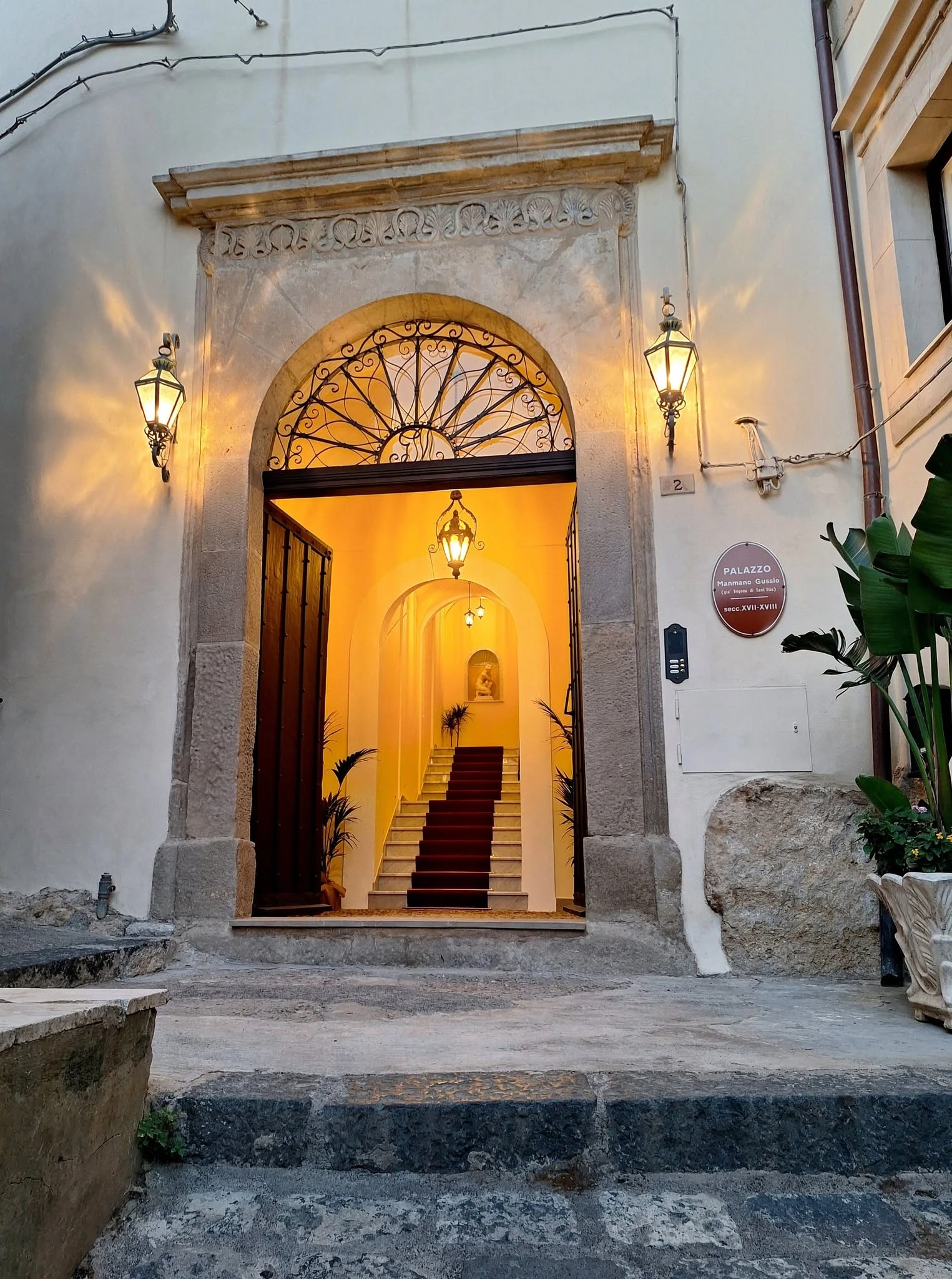
Palazzo baronale Manmano Gussio.
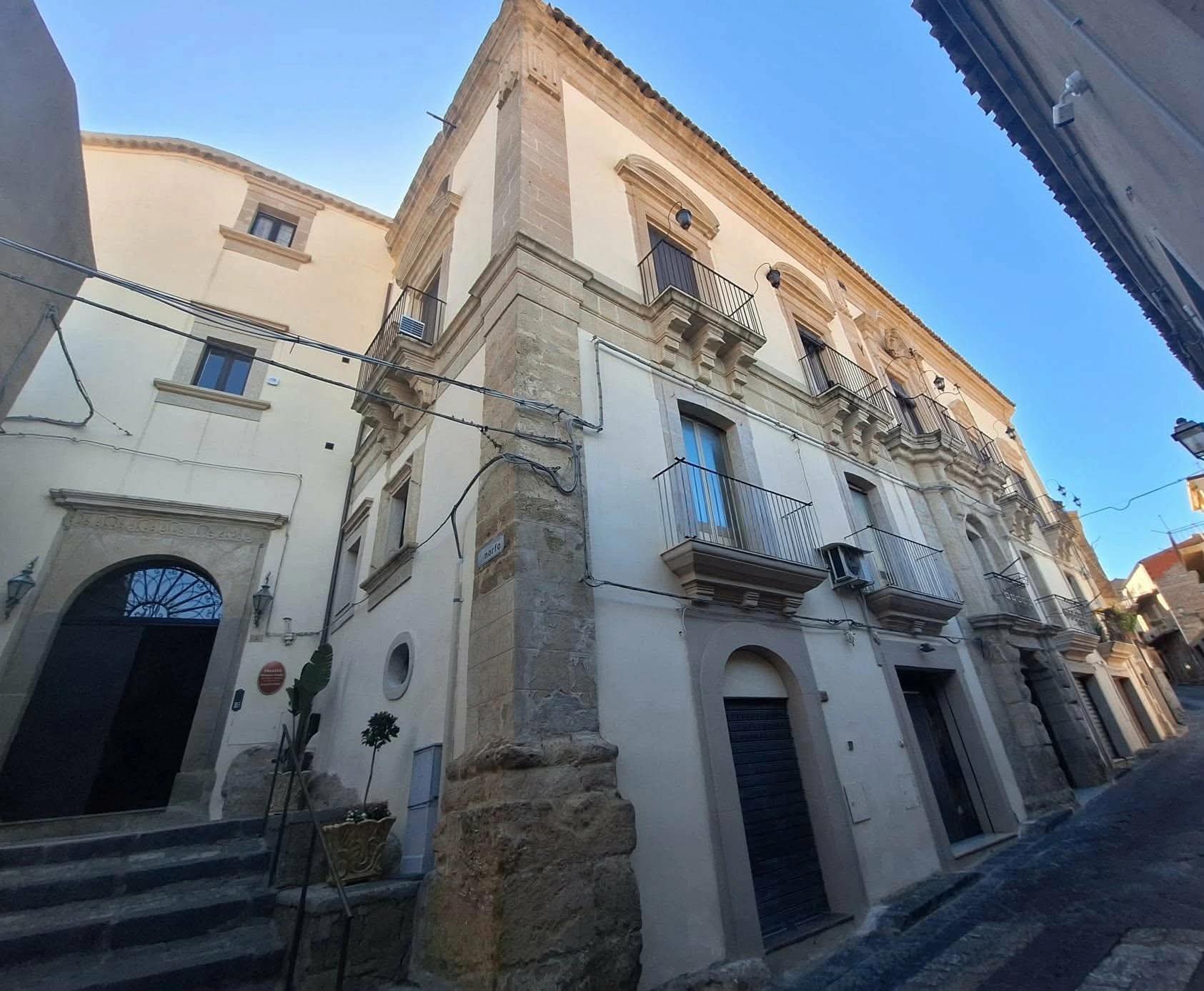
Via Norfo 2 · corner of Via Diodorea 135 · Agira
View photo01 / THE PLACE
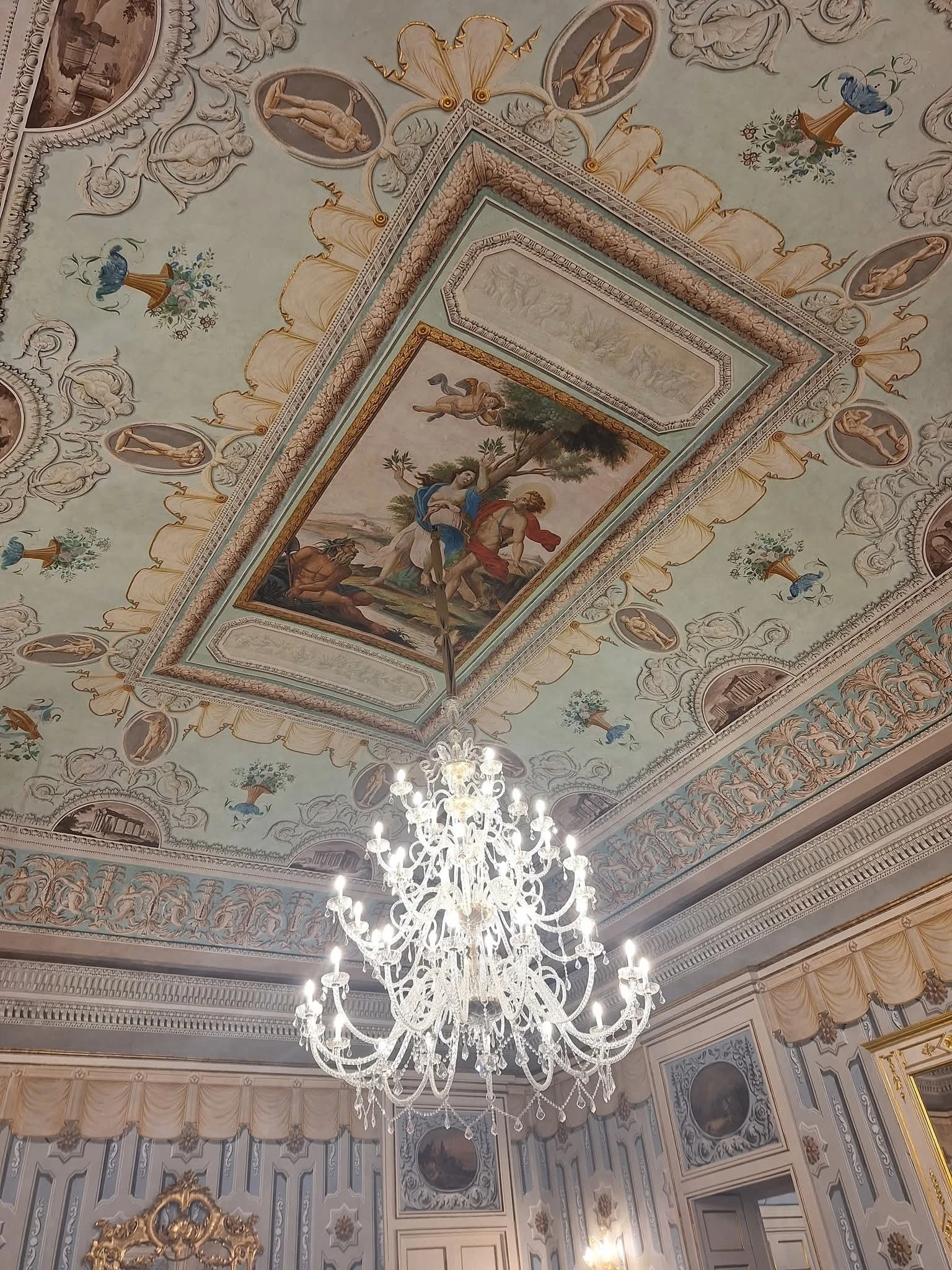
In Agira’s monumental heart, a late 16th-century patrician residence houses the Apollo and Daphne Hall, decorated rooms and a precious collection of family memorabilia, clothing and documents.
LISTEN TO THIS PLACE
The palace, narrated.
An introduction, six chapters and a closing to discover the palace’s families, artworks and rooms. The audio guide and transcripts are in English. Listen in sequence or choose a track.
Audio in English · 8 chaptersIntroduction — Welcome to Palazzo Manmano Gussio
- Listen 0:40
Introduction — Welcome to Palazzo Manmano Gussio
Read the transcript
Welcome to Palazzo Manmano Gussio, a historic baronial residence in the heart of Agira.
This house holds more than four centuries of history. A history of families, works of art, and rooms that preserve traces of the people who once lived here.
The palace stands on Via Norfo, at the corner of Via Diodorea. It once belonged to the Trigona family, who would later become Princes of Sant’Elia. Its story then became intertwined with the Manmano Gussio family, whose name it bears today.
Let us begin outside, where the architecture already tells part of its long story.
- Listen 0:48
Chapter 1 — A façade through the centuries
Read the transcript
The palace dates back to the late sixteenth century.
Its façade preserves the character of the grand residences built during that period and the century that followed.
Look for the pilasters: flat, upright features that project slightly from the wall. Along with the stonework marking the corners, they give the building its distinctive rhythm.
One section projects further forward and is decorated with half-columns.
These details express the prestige of the residence, while its survival tells us something about the strength of its construction.
The palace withstood the great earthquake of sixteen ninety-three, preserving its original layout.
Today, its architecture still allows us to recognise the design of a noble residence created more than four hundred years ago.
- Listen 0:52
Chapter 2 — The comet of the Trigona family
Read the transcript
To meet the first protagonists of this story, we turn to the Trigona family.
Barons of Bonfallura and later Princes of Sant’Elia, they settled in Agira to manage their estates. Marriage alliances also helped strengthen their presence in the town.
A lasting sign of their connection to the palace can still be seen in the entrance hall.
Here, a mosaic made from pebbles and terracotta depicts the family’s seven-pointed comet.
It is a small detail, but one that connects the building directly to the people who shaped its history.
This branch of the family also included Vespasiano Trigona, an eighteenth-century Jesuit theologian. He served as Provincial Superior of the Jesuits in Sicily and examined candidates for the episcopate in Rome under Popes Benedict the Fourteenth and Clement the Thirteenth.
- Listen 0:44
Chapter 3 — The arrival of the Manmano Gussio family
Read the transcript
A new chapter began in seventeen thirty-five.
That year, Don Nicolao Manmano, from the family of Castel di Lucio, married Agata Gussio of Nicosia and purchased an initial portion of the palace.
The acquisition was completed in seventeen fifty-one, with the final deed of purchase.
From then on, the residence became closely linked to the Manmano Gussio family.
Across the generations, family members held public and religious offices, pursued cultural interests, and commissioned works of art.
The palace became a place where these ambitions took shape: in its rooms, its decorations, and the objects that still help tell its story.
- Listen 0:59
Chapter 4 — The Hall of Apollo and Daphne
Read the transcript
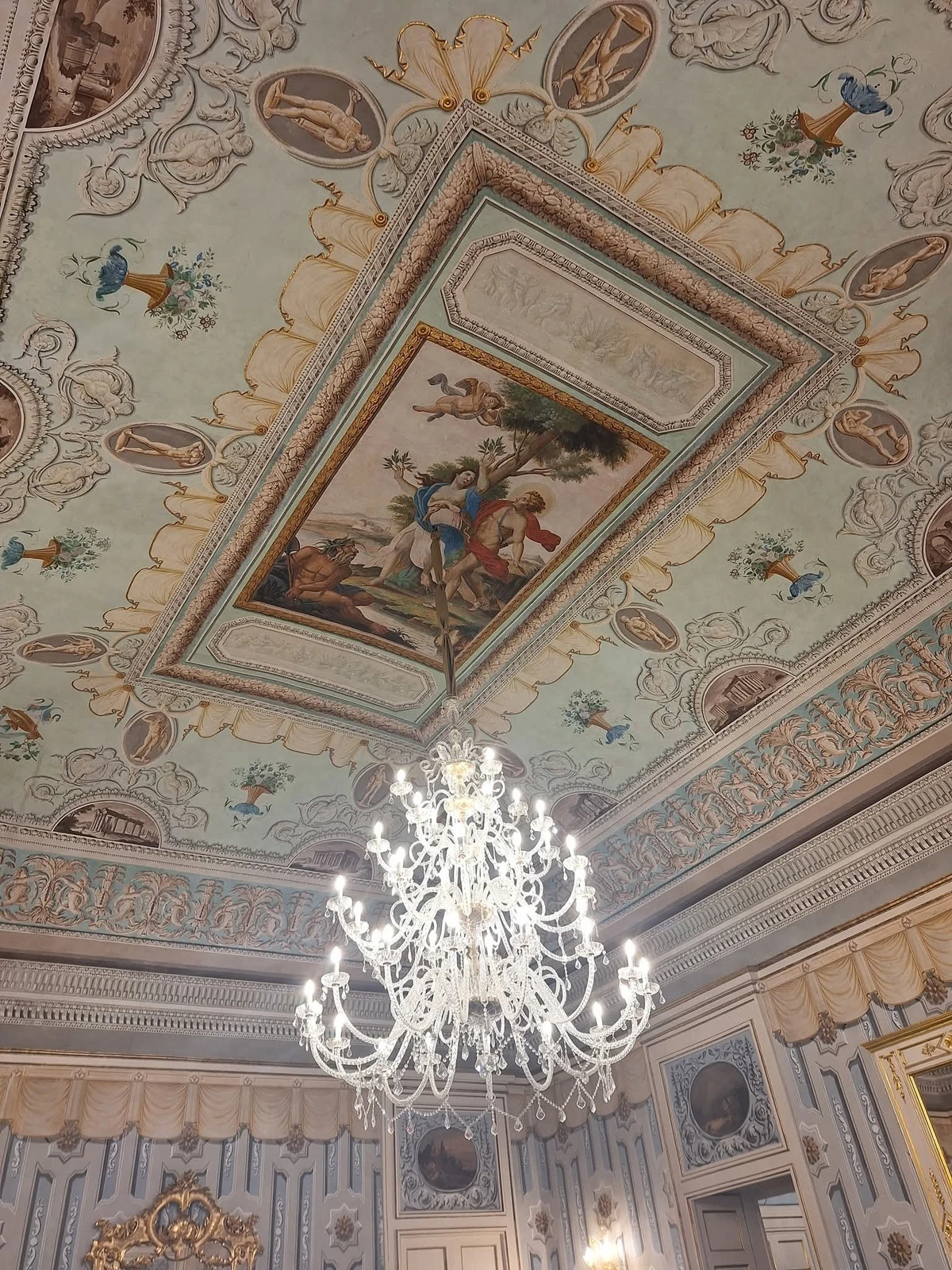
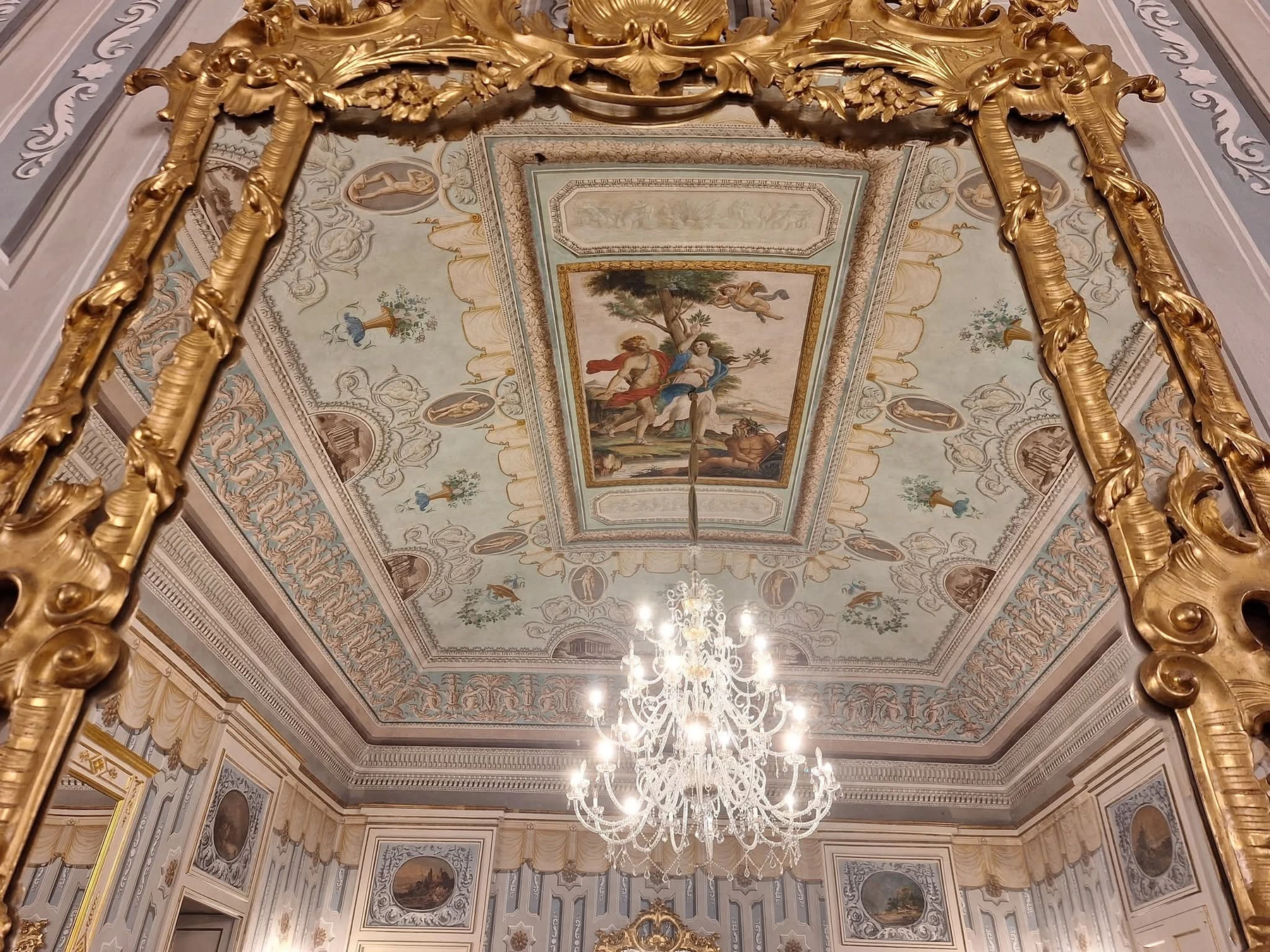
At the heart of the main reception floor lies the magnificent Hall of Apollo and Daphne, decorated with paintings from the late eighteenth century.
Its name recalls the classical myth of Apollo and the nymph Daphne, who was transformed into a laurel tree as she fled from the god.
Mauro Manmano Gussio, who served as mayor and Captain of Justice, commissioned the mythological paintings on this floor.
They reflect the fascination with the ancient world that shaped the culture of the time.
These were the years of renewed interest in classical art and the Grand Tour, the journey through Italy that attracted European travellers and artists.
The surrounding rooms are arranged symmetrically around the hall.
Neoclassical interiors, nineteenth-century decorations, a bedroom with Louis the Sixteenth-style wooden panelling, and the family chapel reveal how tastes and needs changed from one generation to the next.
- Listen 0:53
Chapter 5 — The people behind the palace
Read the transcript
The family’s story continues through people with very different interests and responsibilities.
Vincenzo Manmano Gussio administered the estate of Mirabella on behalf of the Prince of Biscari. Drawn to Enlightenment ideas, he wrote a political treatise inspired by the theories of Montesquieu.
Filippo Manmano Gussio, who served as vicar forane at Santa Margherita, commissioned a precious wooden statue of the Immaculate Conception from the Neapolitan sculptor Giuseppe Picano.
Giuseppe Manmano Occhipinti served as mayor of Agira from eighteen sixteen to eighteen thirty.
Among the family’s later descendants was Vincenza Manmano, who married Michele Luigi Maria Cutrona, Count of Cerami.
These different lives help us imagine the palace as a family home, connected to the wider life of the town.
- Listen 0:52
Chapter 6 — The courtyard and the palace’s revival
Read the transcript
Behind the palace lies a courtyard arranged on two levels.
Here, a monumental underground cistern was carved into the rock.
Alongside the grand reception rooms, this structure reminds us of the practical needs of daily life within the residence.
A careful conservation project began in two thousand and six.
Led by Orazio La Delfa and his wife Elena Minnì, the restoration brought renewed life to the interiors, which can now be visited by prior arrangement.
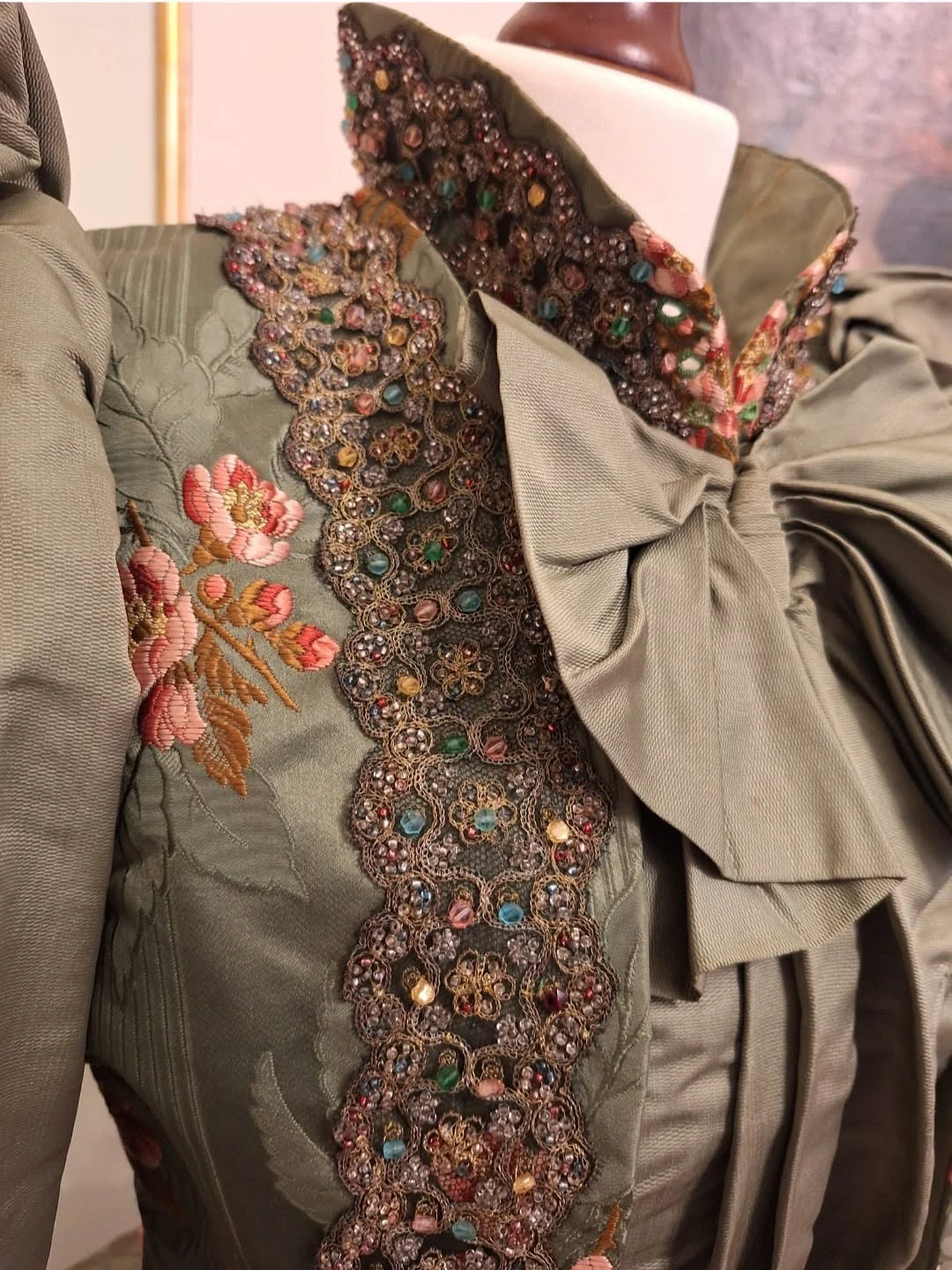
Today, the palace houses a permanent display of family keepsakes, clothing, and historical documents dating from the late sixteenth to the nineteenth century.
Together with the architecture and paintings, these objects preserve a more intimate side of history: the lives, habits, and memories of the people who once called this place home.
- Listen 0:36
Closing — Continue discovering Agira
Read the transcript
Our visit to Palazzo Manmano Gussio ends here.
If you would like to explore the interiors, remember to arrange your visit in advance. You will be able to see the rooms and details described in this audio guide for yourself.
Continue exploring Agira with us, discovering its monuments, stories, and hidden corners at your own pace.
Hello Agira is a free, independent project created and curated by Giuseppe Ricceri to share the town’s heritage and help more people discover it.
Thank you for listening, and enjoy exploring Agira.
Free audio guide created and curated by Giuseppe Ricceri for Hello Agira.
HISTORY AND LANDSCAPE
A residence in Agira’s monumental heart.
Palazzo Manmano Gussio, formerly belonging to the Trigona Princes of Sant’Elia, is one of the area’s most distinguished examples of patrician residential architecture. The complex dates to the late 16th century and stands at Via Norfo 2, on the corner of Via Diodorea 135.
Having survived the great earthquake of 1693 unscathed thanks to its robust construction, the palace retains its original layout and a facade shaped by late Mannerist and 17th-century design, articulated by pilasters, corner masonry and a projecting section with engaged columns.
The piano nobile and the Apollo and Daphne Hall.
On the principal floor, the piano nobile, the rooms are arranged symmetrically around the grand Apollo and Daphne Hall, a painted masterpiece of the late 18th century.
Alongside the hall are 19th-century Neoclassical and Eclectic rooms, a bedroom with Louis XVI-style wood panelling and the family chapel. These different spaces reveal the tastes and transformations of the residence over time.
The courtyard, cistern and restoration.
At the rear, a two-level courtyard contains a monumental underground cistern carved into the rock. This part of the complex complements the reception rooms with structures serving the everyday life of the residence.
A meticulous conservation restoration, begun in 2006, brought the interiors back into use. The restoration undertaken by Orazio La Delfa and his wife Elena Minnì now allows visitors to rediscover the palace through visits arranged in advance.
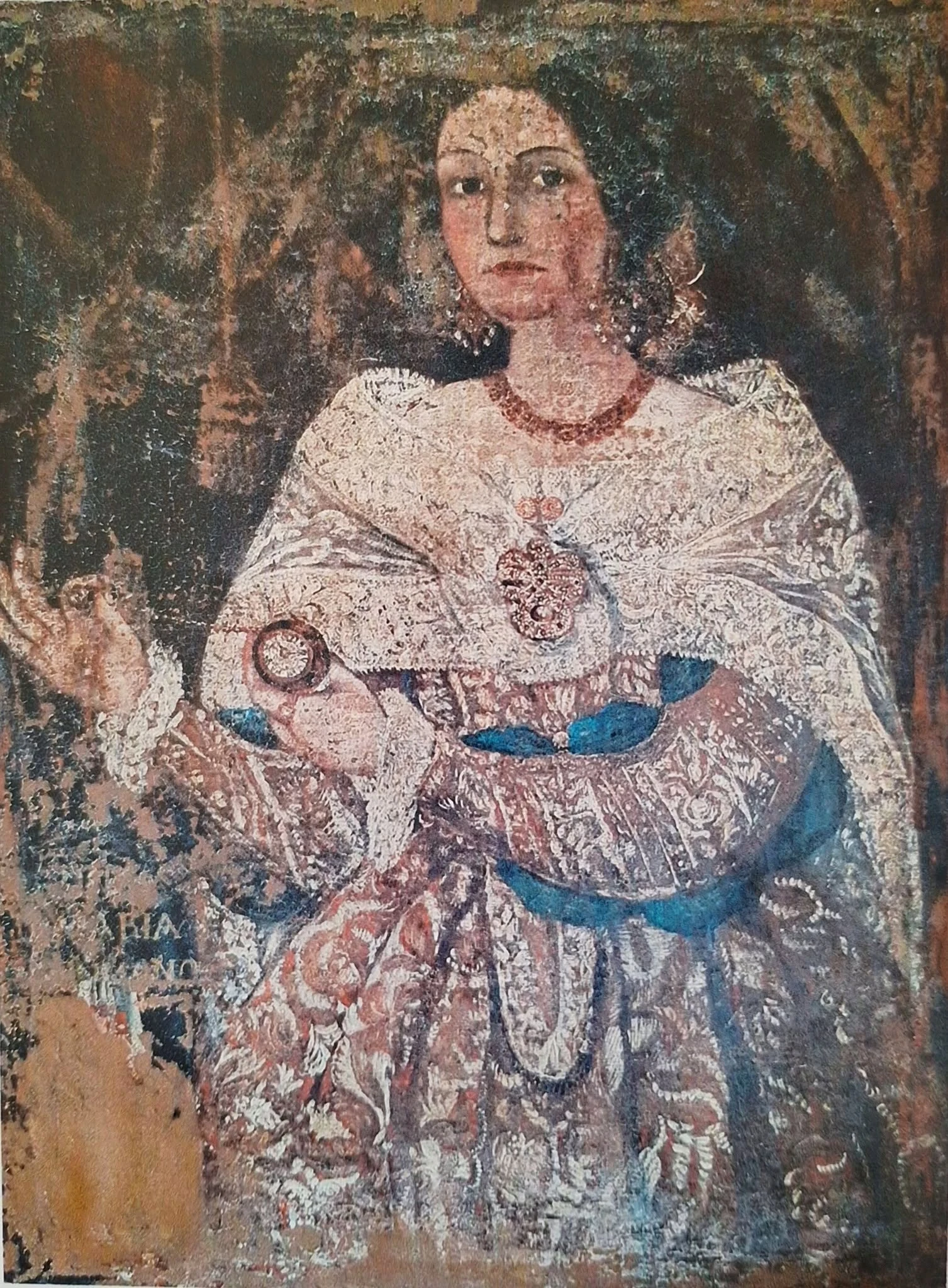
The interiors house a permanent exhibition of family memorabilia, historic clothing and documents dating from the late 16th to the 19th century, complementing the story of the building and the people who lived here.
The Trigona family and the seven-pointed comet.
The earliest documentary evidence of the building is intertwined with the history of the Trigona family, Barons of Bonfallura and future Princes of Sant’Elia, who settled in Agira to manage their estates and through advantageous marriage alliances.
A precious heraldic emblem survives from this period: the pebble and brick mosaic depicting the family’s seven-pointed comet, still visible in the entrance hall.
Among the branch’s most distinguished members was the Jesuit theologian Father Vespasiano Trigona (1692–1761), Provincial of Sicily and a respected examiner of bishops in Rome under Popes Benedict XIV and Clement XIII.
The arrival of the Manmano Gussio family.
From 1735, the history of the residence became linked to the Manmano family of Castel di Lucio. That year, Don Nicolao Manmano, descended on his mother’s side from the Larcan barons of Capizzi, married Agata Gussio of Nicosia and acquired an initial portion of the palace.
The acquisition was completed in 1751 with the final deed of purchase.
Prominent members of the family.
Mauro Manmano Gussio, Mayor and Captain of Justice, was the patron who commissioned the mythological painted cycles of the piano nobile, works inspired by the rediscovery of classical antiquity and the cultural world of the Grand Tour.
Vincenzo Manmano Gussio, baronial governor of the Mirabella estate for the Prince of Biscari, embodied the spirit of the Enlightenment and wrote a political treatise based on the doctrines of Montesquieu.
Filippo Manmano Gussio, vicar forane of Santa Margherita, commissioned the precious statue of the Immaculate Conception, a wooden masterpiece by the Neapolitan sculptor Giuseppe Picano.
Giuseppe Manmano Occhipinti was Mayor of Agira from 1816 to 1830. His role helped carry the family’s assets and influence through the period of the liberal uprisings of 1848.
One of the family’s last descendants, Vincenza Manmano, married Michele Luigi Maria Cutrona, Count of Cerami (1858–1938).
TAKE A CLOSER LOOK
Details make the place.
The Apollo and Daphne Hall
The heart of the piano nobile, with its late 18th-century mythological painted cycle.
The Trigona comet
In the entrance hall, the pebble and brick mosaic preserves the family’s seven-pointed emblem.
Family memories
Clothing, memorabilia and documents in the permanent exhibition, alongside historic rooms and furnishings.
THE PLACE, IN PICTURES
Change your perspective.
A closer look at the details and the surrounding landscape.
Sources for further reading
KEEP EXPLORING
One stop. Many directions.
Keep exploring Agira, with time for breaks.